A Real At Home Workout Plan for Women 4 Weeks, No Equipment, No Guesswork
This plan covers beginner to intermediate bodyweight training for generally healthy adult women. It does NOT address postpartum exercise, training during pregnancy, or working around specific injuries. If you have existing health conditions, check with your doctor before starting any new routine.
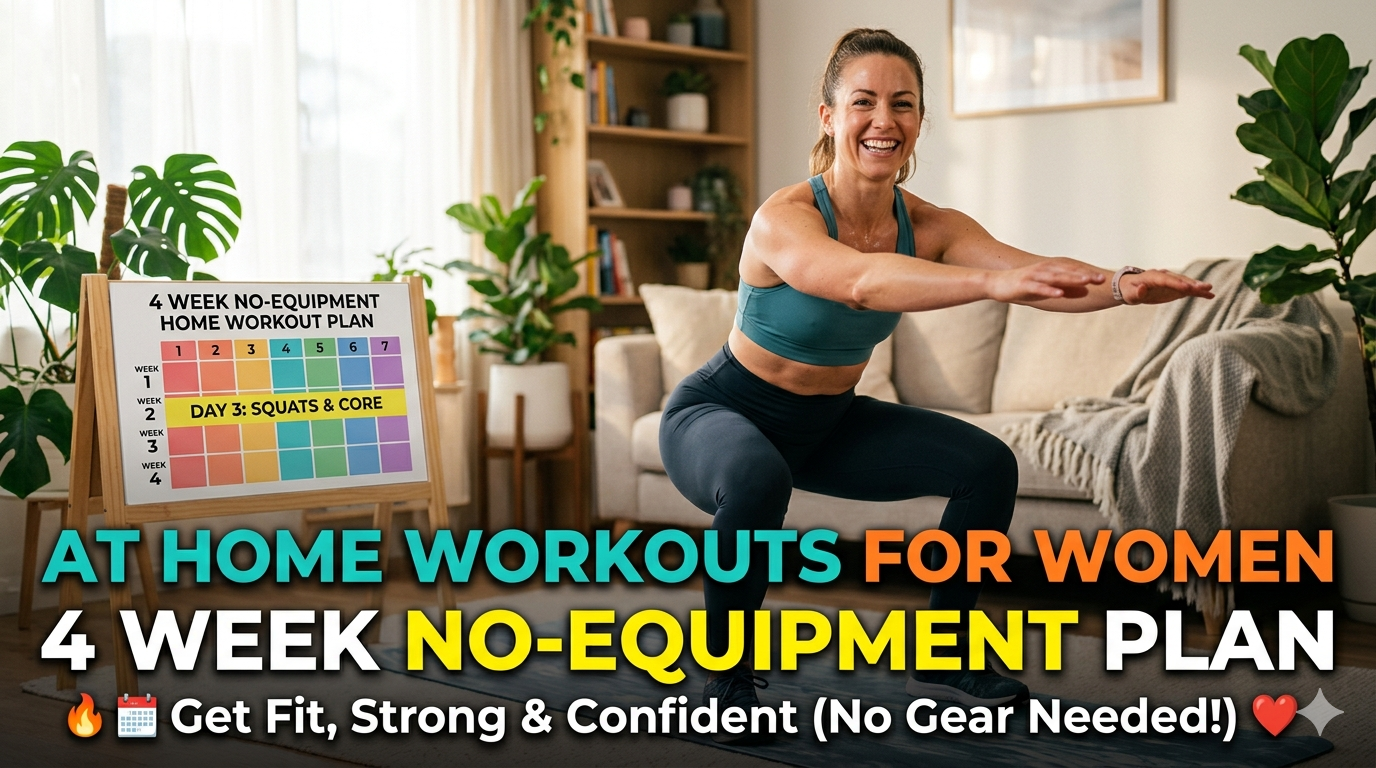
At home workouts for women are structured exercise routines typically bodyweight based performed at home without gym equipment. When built around progressive overload (gradually increasing difficulty each week), they produce measurable strength and fitness results comparable to gym based training. This plan gives you exactly that: a 4 week schedule with built in progression, small space modifications, and a real answer to what happens when motivation drops.
According to PTPioneer’s 2024 Home Fitness Industry Statistics report, women now represent 56.7% of home fitness equipment users in the US. As of 2023, Americans exercise at home at a 10% higher frequency than at the gym with 51% citing convenience as the primary reason.
That’s not a pandemic trend. It’s a permanent shift.
Why Most At Home Workout Plans Stop Working After Day Three
Here’s the thing: the problem isn’t motivation. It’s structure.
Women who’ve tried random YouTube workout circuits often report the same experience Day 1 feels energizing, Day 2 feels manageable, Day 3 raises the question nobody answers: now what? There’s no escalation. No next step. Just the same flat 20 minute routine on repeat until boredom wins and the mat goes back under the bed.
What most articles miss and what Healthline’s popular 30 move at home circuit skips entirely is a weekly schedule with progressive overload built in. Progressive overload means each week you do slightly more than the week before: one more rep, a harder exercise variation, or 15 fewer seconds of rest. Without it, your body adapts fast. It stops changing.
Or maybe I should say it this way: doing the exact same workout indefinitely is essentially maintenance. You stay functional. You don’t get stronger.
A 2022 randomized controlled trial comparing full body versus split training routines in untrained women found that both groups made nearly identical gains in strength and muscle mass as long as weekly volume was matched. The key variable wasn’t gym access or equipment. It was consistency and planned progression over time.
Most people assume you need weights to build real strength. The data says otherwise.
Your 4 Week At Home Workout Schedule The Full Plan
To start a progressive at home workout plan for women, follow these steps:
- Pick 3 non consecutive days per week (Monday, Wednesday, Friday works well).
- Cycle through Days A, B, and C in order don’t skip ahead.
- In Weeks 3–4, add 2–3 reps per set and cut rest time by 15 seconds.
- Rest at least 48 hours between sessions to let muscles recover.
- Log your reps each session numbers on paper are how you prove you’re progressing.
Week 1–2: Foundation Phase (3 Days/Week)
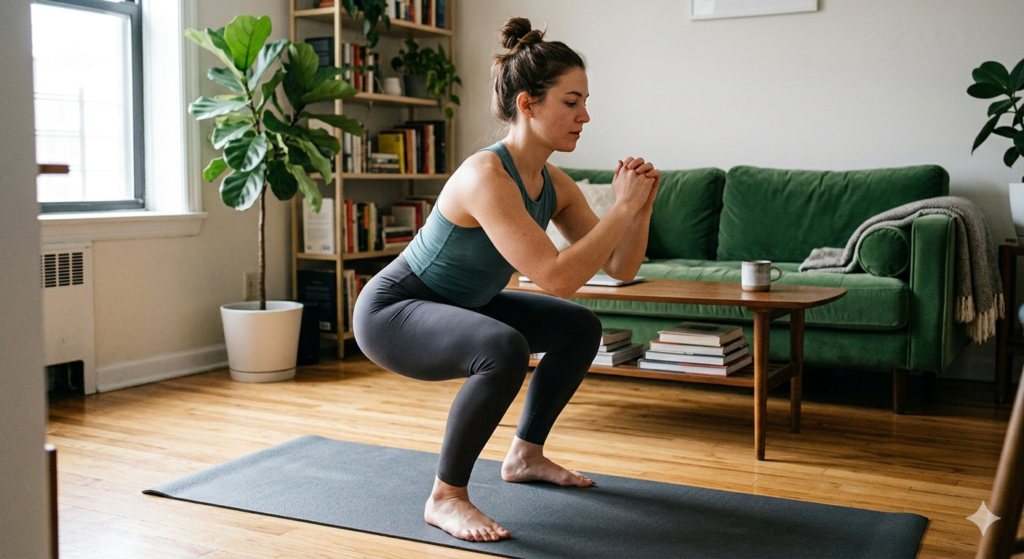
Day A Lower Body + Core
| Exercise | Sets | Reps | Rest |
|---|---|---|---|
| Bodyweight Squat | 3 | 12 | 60s |
| Glute Bridge | 3 | 15 | 60s |
| Reverse Lunge | 3 | 10 each leg | 60s |
| Dead Bug | 3 | 8 each side | 45s |
| Standing Hip Circle | 2 | 10 each direction | 30s |
Day B Upper Body + Core
| Exercise | Sets | Reps | Rest |
|---|---|---|---|
| Incline Push Up (hands on sofa edge) | 3 | 10 | 60s |
| Chair Tricep Dip | 3 | 10 | 60s |
| Superman Hold (3 second hold each rep) | 3 | 8 | 45s |
| Plank Hold | 3 | 20–30 seconds | 45s |
| Shoulder Tap in Plank | 2 | 8 each side | 30s |
Day C Full Body + Low Impact Cardio
| Exercise | Sets | Reps | Rest |
|---|---|---|---|
| Squat to Knee Drive | 3 | 12 | 60s |
| Alternating Lateral Lunge | 3 | 10 each | 60s |
| Slow Mountain Climber | 3 | 16 total | 45s |
| Inchworm Walk Out | 3 | 8 | 60s |
| March in Place | 2 | 60 seconds | 30s |
Week 3–4: Progressive Phase (3–4 Days/Week)
Same three sessions same structure with these specific changes applied:
- Add 2–3 reps to every working set
- Reduce rest from 60 seconds to 45 seconds
- Upgrade push-up variation: incline → knee push-up → attempt 1–2 full push-ups
- Optional 4th day: repeat Day A or add a 20 minute walk + 10 minutes of core
This is the layer competitors skip. Two weeks in, most plans tell you to restart from Day 1. This one tells you to raise the ceiling.
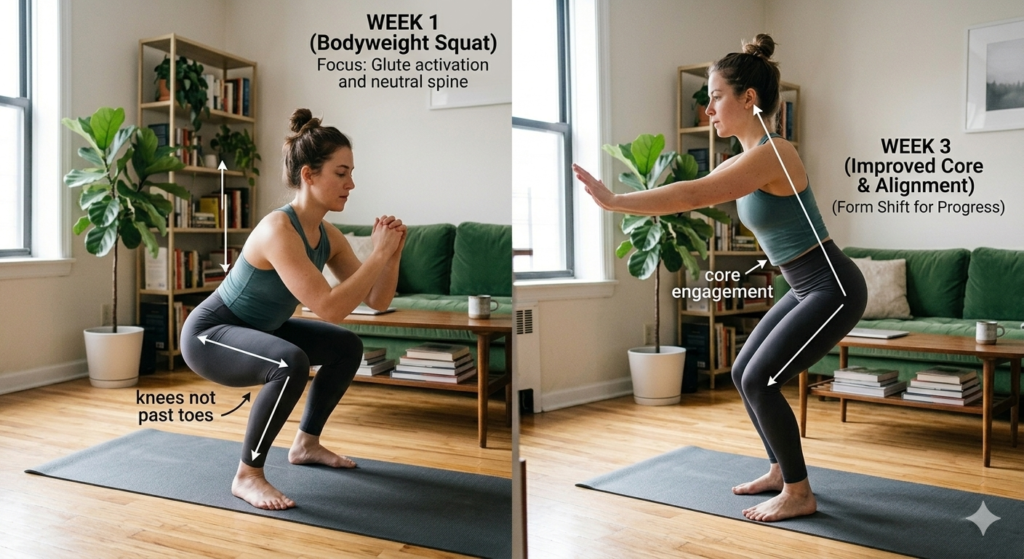
The 15 Best Bodyweight Exercises for Women at Home
Not all exercises earn equal time in a plan. These 15 are included because they work multiple muscle groups simultaneously, require no equipment, and have clear difficulty progressions as you get stronger. No filler.
Lower Body:
- Bodyweight squat → jump squat (progression)
- Glute bridge → single-leg glute bridge
- Reverse lunge → curtsy lunge
- Wall sit → loaded wall sit (hold a full water bottle)
- Lateral lunge
Upper Body:
- Incline push-up → knee push-up → full push-up
- Superman hold
- Chair tricep dip
- Bear crawl hold (isometric shoulder stability, no travel required)
Core:
- Dead bug
- Plank hold
- Side plank
- Bicycle crunch
- Hollow body hold
- Bird dog
Quick note: “core” doesn’t mean abs only. These exercises train the deep stabilizers that protect your lower back during daily activities getting up from the floor, carrying groceries, sitting at a desk for eight hours.
Small Space Modifications How to Work Out in a Studio Apartment
Look if you’ve been avoiding home workouts because your living space is basically a hallway, here’s what actually works.
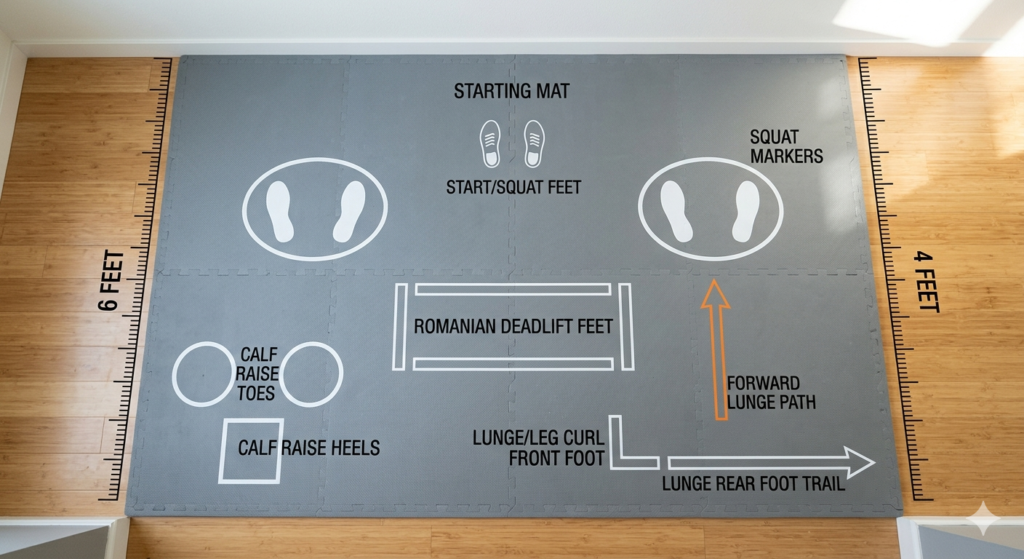
You need approximately 6 feet by 4 feet. One yoga mat’s worth of floor space handles 90% of this plan.
Exercises to swap when space is tight:
| Original Exercise | Small-Space Swap | Why It Works |
|---|---|---|
| Reverse lunge (stepping back) | Stationary split squat | Same quad and glute load, zero travel |
| Fast mountain climber | Slow mountain climber | Reduces forward space demand significantly |
| Inchworm walk out | Pike push up | Upper body load in a compact footprint |
| Lateral shuffle | Side step with squat | No impact, tiny footprint, same lateral pattern |
| Burpee (full) | Squat thrust (no jump) | Apartment safe, dramatically quieter |
On noise: Jumping exercises like jump squats are genuinely problematic in apartments not just for neighbors but for your own joints on hard floors. Swap them for slow tempo squats with a 3 second lowering phase. Same quad demand. Zero complaints from the unit downstairs.
What to Do When You Have Zero Motivation and It’s Not a Willpower Problem
This section exists because every other guide tells you to “stay consistent” without explaining the mechanism behind it.
Behavioral research on habit formation cited by the American College of Sports Medicine’s exercise adherence literature consistently shows that motivation follows action, not the other way around. Waiting until you feel like working out before you work out is the exact cognitive loop that kills most plans by Week 2.
The two minute rule is real and it works. Commit only to putting on your workout clothes and getting on the mat. That’s the full commitment. Most of the time, you’ll continue. On the days you don’t, you still showed up and that matters for the habit architecture more than the sweat does.
When energy is genuinely low (not lazy low, but sleep deprived or hormonally depleted), don’t skip scale down instead:
- 5 minutes of hip circles and cat cow stretches
- A 15 minute walk at any pace
- One single set of glute bridges
Something always beats nothing. And skipping creates a skipping pattern faster than most people realize.
Some coaches argue that accountability partners and group classes are the only reliable fix for long term consistency. That’s valid for women who thrive on external structure and social energy. But if you’re an introvert who finds group settings draining, a private solo ritual same time, same corner, same playlist builds the same neurological groove. The structure is what matters, not the social wrapper around it.
Free Apps and Minimal Gear Worth Considering
Quick Comparison
| Option | Best For | Key Benefit | Limitation |
|---|---|---|---|
| Nike Training Club (free) | Structured programming from scratch | Expert designed plans, clear video demos | Requires phone or screen nearby during sessions |
| FitOn (free) | Guided follow along sessions | Female trainer led classes, strong variety | Some programs paywalled after trial |
| Lalo Resistance Bands (~$20–30) | Adding load after Week 4 | Portable, apartment safe, scalable tension | Bands degrade with extended use |
| Bodyweight only (this plan) | True beginners, zero budget | Always available, zero cost | Progress ceiling at advanced training level |
| YouTube (Heather Robertson, Sydney Cummings Houdyshell) | Free follow along with personality | High quality production, free forever | No built in week over week progression tracking |
Bodyweight vs. resistance bands: Bodyweight is better suited for the first 4–8 weeks because it builds movement patterns and body awareness before introducing external load. Bands are what comes next not a replacement for bodyweight, a logical extension of it. The key difference is sequencing, not quality.