What Is a Traps Muscle Workout at Home?
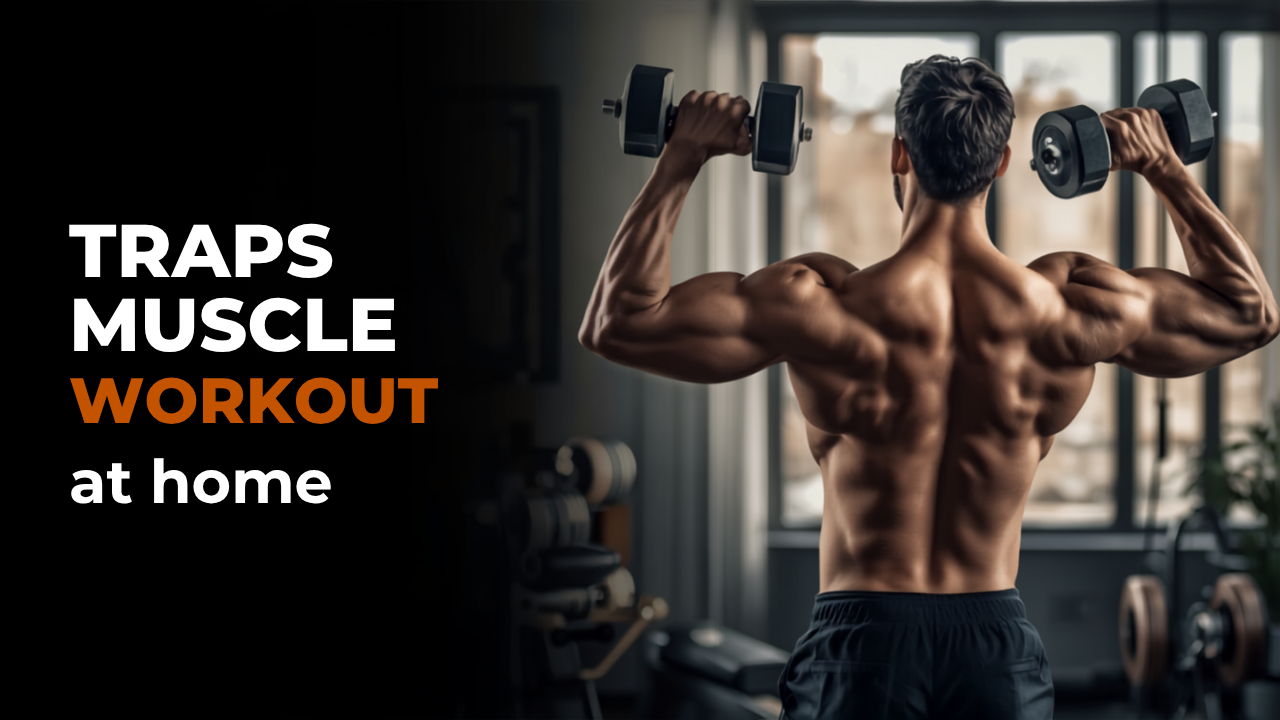
A traps workout at home focuses on training the trapezius muscle using bodyweight, dumbbells, or resistance bands to build strength, improve posture, and enhance upper body definition without needing a gym. The trapezius is a large muscle across your upper back and neck. It plays a key role in shoulder movement, posture alignment, and upper body stability. Training it correctly can transform both your strength and appearance.
Why Training Your Traps Matters
Strong traps do more than just look good they support your entire upper body.
Key benefits:
- Better posture (reduces slouching from desk work)
- Stronger shoulders and neck
- Improved lifting performance
- Balanced upper-body aesthetics
If you spend long hours sitting, targeting your traps can also relieve tension and improve spinal alignment.
Understanding the Trapezius Muscle (The Game Changer Most Miss)
Most people train traps incorrectly because they only focus on one area.
The trapezius has three parts:
1. Upper Traps
- Responsible for shoulder elevation
- Activated during shrugs
2. Middle Traps
- Control scapular retraction (pulling shoulder blades together)
- Important for posture
3. Lower Traps
- Stabilize shoulders and support proper alignment
- Often neglected but critical for long term strength
Why this matters:
If your traps aren’t growing, chances are you’re ignoring the middle and lower sections.
Best Traps Exercises at Home
Upper Traps Exercises
Dumbbell Shrugs
- Stand tall with weights at your sides
- Lift shoulders straight up
- Hold for 1–2 seconds, then lower slowly
Resistance Band Shrugs
- Step on a band and hold handles
- Elevate shoulders without bending arms
Middle Traps Exercises
Bent Over Reverse Fly
- Hinge forward at hips
- Raise arms out to the side
- Squeeze shoulder blades together
Band Pull Aparts
- Hold band in front
- Pull outward until arms extend wide
Lower Traps Exercises (Most Underrated)
Prone Y Raises
- Lie face down
- Raise arms in a Y position
- Focus on controlled movement
Wall Slides
- Keep back flat against a wall
- Slide arms upward slowly
Equipment vs No Equipment What Works Best?
| Factor | No Equipment | Dumbbells/Bands |
|---|---|---|
| Effectiveness | Moderate | High |
| Progression | Limited | Easy |
| Cost | Free | Low |
| Muscle Activation | Lower | Higher |
Quick takeaway:
- Beginners can start without equipment
- For faster growth, add resistance (bands or dumbbells)
Step by Step Traps Workout at Home
Beginner Routine (3 Days/Week)
- Shrugs 3 sets × 12 reps
- Reverse Fly 3 sets × 10 reps
- Band Pull Aparts 3 sets × 15 reps
- Y Raises 2 sets × 12 reps
Intermediate Routine
- Increase to 4 sets
- Add slow negatives (3–4 seconds down)
- Include pauses at peak contraction
Advanced Routine
- Combine dumbbells + bands
- Add isometric holds
- Train traps from multiple angles
Weekly Training Plan
| Day | Focus |
|---|---|
| Monday | Upper traps |
| Wednesday | Middle traps |
| Friday | Lower traps + posture |
This split ensures full development and prevents imbalance.
How to Build Traps Faster (What Actually Works)
1. Progressive Overload
Gradually increase resistance, reps, or time under tension.
2. Mind Muscle Connection
Focus on feeling the traps working not just moving weight.
3. Controlled Reps
Avoid rushing. Slow reps increase muscle activation.
4. Train 2–3 Times Weekly
More isn’t always better recovery matters.
Common Mistakes That Kill Trap Growth
- Using momentum instead of control
- Only doing shrugs (ignoring lower traps)
- Lifting too heavy too soon
- Poor posture during exercises
Warning:
Incorrect form can lead to neck strain and shoulder issues. Always prioritize control.
Why Your Traps Aren’t Growing
If you’re not seeing results, here’s what’s likely wrong:
- Lack of progressive overload
- Ignoring middle/lower traps
- Inconsistent training
- Weak mind muscle connection
Fixing these alone can dramatically improve results.
Choosing the Right Equipment (Smart Buying Guide)
Resistance Bands
- Best for beginners
- Portable and affordable
- Ideal for posture exercises
Typical price: $10–$40
Dumbbells
- Better for muscle growth
- Easier to track progression
Typical price: $30–$200
What to choose?
| Goal | Best Option |
|---|---|
| Budget friendly | Bands |
| Muscle growth | Dumbbells |
| Small space | Bands |
| Long term training | Both |
Real World Use Cases
For Beginners
Start with bodyweight and bands. Focus on form.
For Busy Professionals
Use 10–15 minute quick sessions at home.
For Athletes
Combine heavy shrugs with lower trap stability work.
Alternatives to Traditional Trap Workouts
If you want variety or recovery options:
- Yoga → improves posture and flexibility
- Pilates → strengthens stabilizing muscles
- Functional training → builds overall upper-body coordination
Do Traps Workouts Improve Posture?
Yes especially when you train the middle and lower traps.
Strong traps:
- Pull shoulders back
- Align the spine
- Reduce neck tension
This is why posture correction workouts often include trap exercises.
How Long Does It Take to See Results?
- 2–4 weeks: improved muscle activation
- 4–8 weeks: visible strength gains
- 8–12 weeks: noticeable size and definition
Consistency is the biggest factor.
Conclusion
Building strong, defined traps at home is completely achievable with the right approach.
Focus on:
- Training all three parts of the trapezius
- Using controlled, consistent workouts
- Progressively increasing resistance
- Maintaining proper form
You don’t need a gym you need a plan. Stick with it, stay consistent, and your traps will grow stronger, more defined, and more functional over time.