Disclaimer: This article is for informational purposes only and does not constitute medical advice. Consult a healthcare provider before starting any new exercise program, particularly if you have existing health conditions, are postpartum, or have been diagnosed with a metabolic disorder.
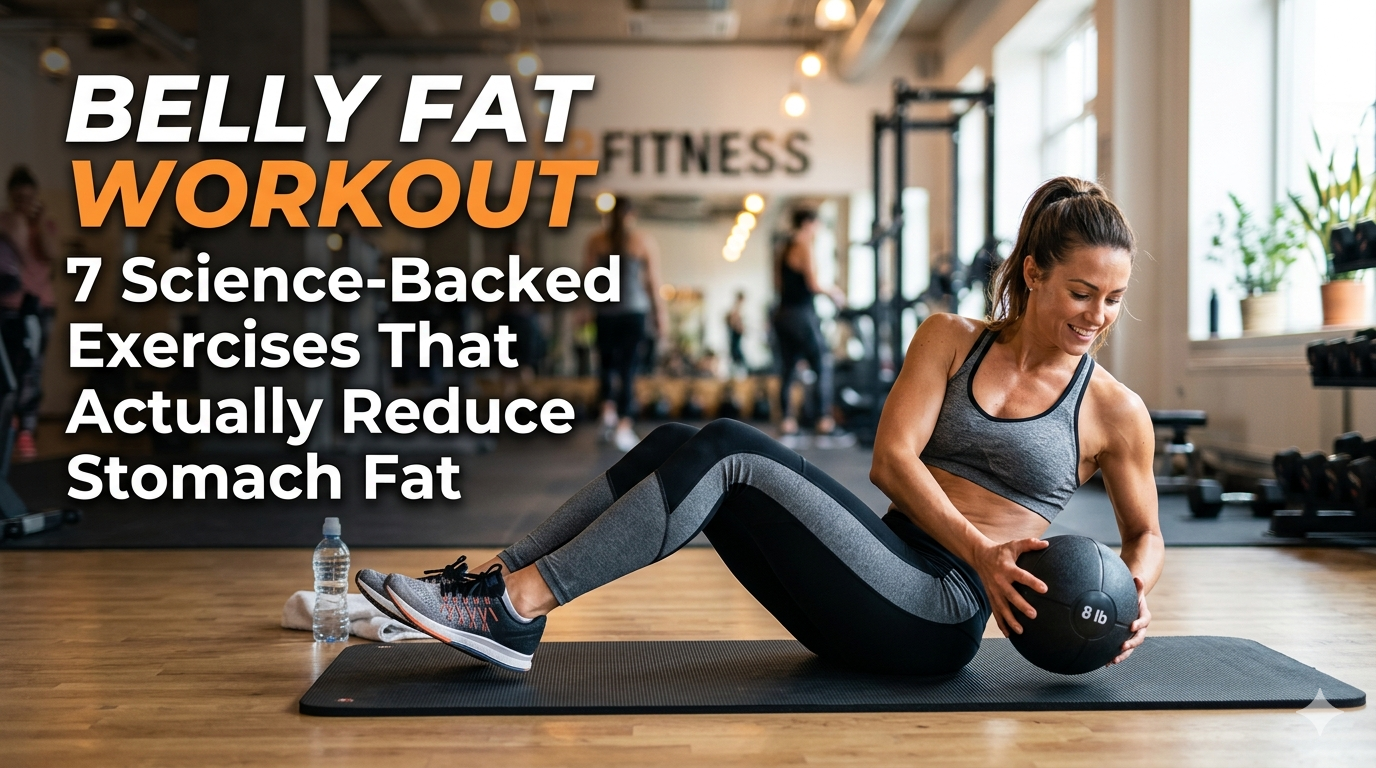
Belly Fat Workout 7 Science Backed Exercises That Actually Reduce Stomach Fat
Crunches feel productive. They burn, they tire you out, and they feel like you’re doing something. The problem? Doing 100 crunches a day will strengthen your core muscles but won’t burn the fat sitting on top of them.
This isn’t a minor detail most guides mention in passing. It’s the reason millions of people spend months on ab workouts and see almost nothing change in the mirror.
The good news: the right belly fat workout structured correctly absolutely works. You just need to know which exercise types the science backs, and in what order to use them.
Quick Definition: A belly fat workout is a structured exercise routine designed to reduce visceral fat the deep abdominal fat stored around your organs through a combination of cardio, HIIT, and resistance training. It works by creating a caloric deficit and hormonal response that draws fat stores from across the whole body, including the belly.
1. Why Crunches Don’t Burn Belly Fat (And What Does)
Spot reduction the idea that you can target fat loss in a specific body area by exercising it has been largely debunked. When you exercise, your body pulls energy from fat reserves distributed across your entire system. It doesn’t selectively draw from your belly just because that’s where you’re moving.
According to WebMD (reviewed January 2025), even dedicated ab exercises pull fat from the body’s general reserves not specifically from the abdominal area. This means a brisk walk burns more belly fat per session than a dedicated crunch routine, because it creates a higher total energy demand across the whole body.
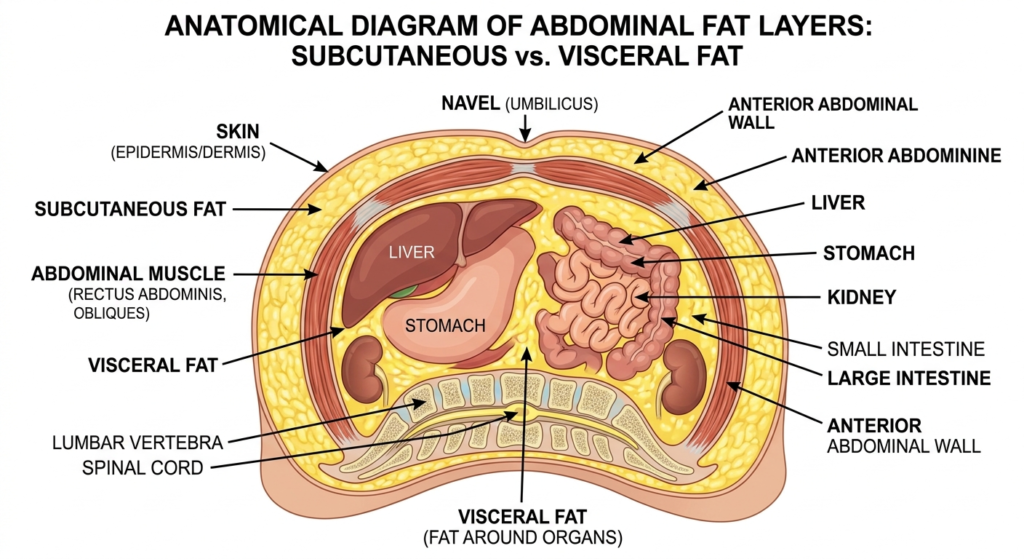
There are three distinct types of belly fat worth knowing: subcutaneous fat (the soft layer directly under your skin), intramuscular fat (within muscle fibers), and visceral fat (the deep fat wrapped around your organs). Visceral fat is the one that drives serious health risks elevated blood pressure, type 2 diabetes, cardiovascular disease. It’s also, fortunately, the type that responds most strongly to the right exercise.
Subcutaneous fat is what you can pinch. Visceral fat is what you can’t see and it’s the more dangerous of the two.
The exercises that move visceral fat are primarily systemic they raise your heart rate, create significant energy expenditure, and trigger fat mobilizing hormones like adrenaline and glucagon. Core exercises matter for strength and posture. But they can’t do that job alone.
2. The Best Belly Fat Workout Types, Ranked by Evidence
According to a 2024 meta analysis of 84 randomized controlled trials published in Obesity Reviews (Chen et al., Tsinghua University, 4,836 participants), HIIT ranked highest overall for reducing visceral adipose tissue (VAT). Aerobic exercise, resistance training, and combined aerobic plus resistance training also produced significant reductions making exercise type and structure the key variable.
That’s not a small study. Eighty four trials. If you’re skeptical of single study headlines as you should be this one holds up.
HIIT High Intensity Interval Training
Short bursts of maximum effort followed by brief rest periods 20 seconds of sprint level effort, 10 seconds rest, repeated for 20–25 minutes create what’s called the EPOC effect (excess post exercise oxygen consumption). Your body keeps burning calories for hours after the session ends. For people short on time, HIIT delivers the highest return per minute of exercise.
Aerobic / Cardio Exercise
Brisk walking, cycling, rowing, swimming any sustained movement that keeps your heart rate between 65–75% of your maximum for 30–45 minutes drives meaningful visceral fat reduction over time. The same 2024 meta analysis confirmed aerobic exercise significantly reduced waist circumference alongside VAT. It’s also the most forgiving option for beginners whose joints aren’t ready for HIIT yet.
Resistance Training
Lifting builds muscle. More muscle mass raises your basal metabolic rate meaning you burn more calories at rest, 24 hours a day. The 2024 Obesity Reviews subgroup analysis found resistance training reduced VAT in males and in people with body fat percentage under 40% but the effect was less significant in women with higher body fat percentages.
Some experts argue that resistance training alone is sufficient for fat loss and cardio is optional. That’s valid if you’re an already active individual focused on body composition. But if you’re dealing with significant visceral fat as a primary goal, the evidence is clear: resistance training works better as part of a combined program, not as a standalone strategy.
Combined Training (Aerobic + Resistance)
This is arguably the most practical long term approach. It covers fat burning efficiency from cardio, muscle preservation from lifting, and metabolic rate elevation from both. For most people who aren’t training for a specific athletic goal, combined training is the structure worth building a routine around.
Quick Comparison: Belly Fat Workout Types
| Workout Type | Best For | Key Benefit | Limitation |
| HIIT | Time limited schedules | Highest VAT reduction; EPOC effect post workout | High injury risk for true beginners |
| Aerobic / Cardio | Consistent fat loss over weeks | Sustainable, low barrier to entry | Slower visible results than HIIT alone |
| Resistance Training | Muscle preservation during fat loss | Raises resting metabolic rate all day | Less direct VAT impact in some women |
| Combined (Cardio +Weights) | Most people seeking lasting results | Hits all fat reduction pathways at once | Requires more total weekly time |
3. The Workout Sequence Nobody Talks About
Most trainers and virtually every workout article online put core exercises at the end of a session. It’s standard practice. It might also be the wrong approach if belly fat is your specific goal.
Here’s the thing: a 2023 study found that participants who performed targeted abdominal exercises before their cardio session lost significantly more belly fat than those who did only general exercise even though both groups burned the same total calories. The proposed mechanism is increased blood flow to the abdominal region during core work, which primes those fat cells for mobilization when cardio begins immediately after.
I’ve seen conflicting data here some researchers flag the study’s sample size and call for replication. My read is this: reordering your workout costs absolutely nothing and has plausible mechanistic support. Core first, cardio second. Try it for four weeks and judge by the mirror and the measuring tape.
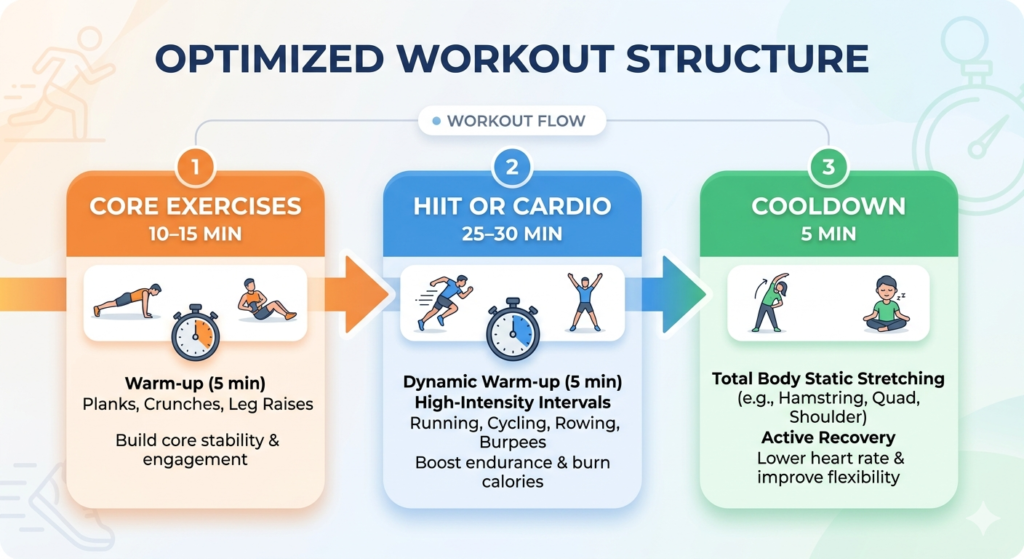
Look if you’ve been finishing workouts with a few sets of planks as a cooldown afterthought, here’s what actually works better: flip the sequence. Ten to fifteen minutes of targeted core work first, then your cardio. That’s the only structural change, and it’s free.
A 2023 study published in BOXROX (citing findings from researchers examining spot reduction mechanisms) found that participants who combined targeted ab exercises with subsequent aerobic activity lost significantly more belly fat than those performing only general exercise with equal caloric expenditure across both groups. The sequence of exercise, not just the type, influenced where fat loss occurred.
4. Your Weekly Belly Fat Workout Plan
This guide covers beginner to intermediate fitness levels. It does not address belly fat reduction in clinical obesity, postpartum recovery, or individuals with conditions like PCOS, hypothyroidism, or Cushing’s syndrome those scenarios require personalized medical guidance.
To start reducing belly fat with exercise, follow these steps:
- Do 10–15 minutes of core exercises (planks, dead bugs, mountain climbers) before any cardio.
- Follow immediately with 25–30 minutes of HIIT or brisk aerobic cardio at 65–75% of your max heart rate.
- Add two resistance training sessions per week on non consecutive days full body compound movements.
- Include one active recovery day (light walk or yoga) this reduces cortisol, which directly drives visceral fat storage.
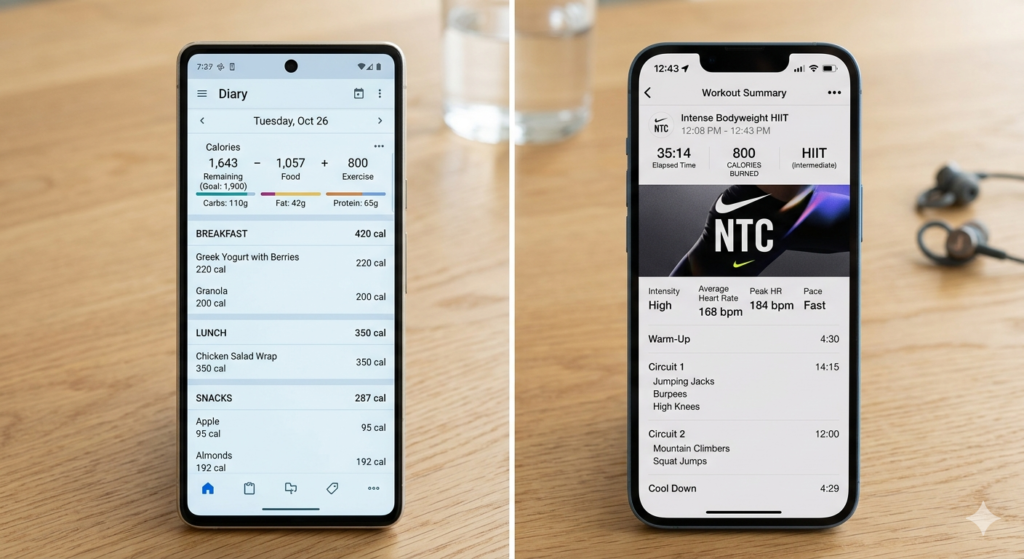
- Track workouts and daily food intake using MyFitnessPal to maintain a consistent 300–500 calorie deficit.
The Full Weekly Schedule
| Day | Workout | Duration | Notes |
| Monday | Core circuit + HIIT cardio | ~40 min | Ab work first, then HIIT sequence matters |
| Tuesday | Full body resistance training | ~40 min | Compound lifts: squats, deadlifts, rows |
| Wednesday | Brisk walk or Zone 2 cycling | ~40 min | 65–70% max heart rate fat oxidation zone |
| Thursday | Core circuit + HIIT cardio | ~40 min | Repeat Monday structure |
| Friday | Full body resistance training | ~40 min | Progress weight if Tuesday felt easy |
| Saturday | Light walk, yoga, or stretching | ~30 min | Active recovery keeps cortisol low |
| Sunday | Full rest | Sleep 7–9 hours non negotiable for results |
Quick note: If you’re a genuine beginner no regular exercise in the past three months replace the HIIT days with 30 minute brisk walks for the first two to three weeks. Starting with high intensity work before your body adapts is the fastest route to injury, and injury is the fastest route to quitting.
A Garmin fitness tracker (or even the free Garmin Connect app) is worth using to monitor heart rate zones during cardio sessions. Zone 3–4 roughly 70–85% of your maximum heart rate is where visceral fat oxidation peaks. MyFitnessPal handles the caloric tracking side. And the Nike Training Club app offers free structured HIIT routines with progressions designed for fat loss useful if you’d rather follow guided sessions than build your own.
5. Mistakes That Quietly Stall Belly Fat Loss
Doing only ab exercises. Already covered but worth one more line. Planks and crunches build core strength. They don’t cause meaningful fat loss without systemic cardio paired alongside them.
Ignoring sleep. Cortisol your primary stress hormone rises with poor or insufficient sleep, and chronically elevated cortisol directly triggers visceral fat storage. Researchers at the University of Chicago found that sleep restriction caused participants to store a significantly higher proportion of their fat loss as visceral fat rather than subcutaneous fat. You can’t out train a cortisol problem. Sleep is part of the belly fat workout equation whether you count it or not.
Seven to nine hours. Non negotiable.
Training hard but eating in a caloric surplus. The Nike Training Club app has genuinely excellent free HIIT routines. But no workout can overcome consistent overeating. The math doesn’t allow it.
Choosing cardio or weights not both. Cardio burns more during the session. Resistance training raises resting metabolism so your body burns more all day. They’re not competing approaches. They work together.
What most belly fat guides skip: the cortisol sleep connection. Exercise three to five days a week is only half the lever. Chronic stress, poor sleep, and inconsistent routine will reload visceral fat faster than workouts can remove it. Address all three, or the results won’t stick.
HIIT vs Steady State Cardio for Belly Fat:
HIIT is better suited for people with limited time who are comfortable with high effort intervals, because it produces higher visceral fat reduction per minute and triggers the EPOC after burn effect. Steady state cardio works better for beginners, people managing joint issues, or anyone building a sustainable daily habit. The key difference is time efficiency vs. accessibility for long term results, combining both across your weekly plan beats choosing one exclusively.