The Back Workout Guide Women Actually Need (And Were Never Given)
Most back workout guides were written for men and renamed for women. Same exercises, same rep ranges, same total silence on what makes this muscle group different for a female body.
This guide isn’t that.
This guide works best for healthy women at any experience level looking to build back strength, correct posture, and reduce pain from sedentary habits. It does NOT address rehabilitation from diagnosed spinal injuries, disc herniation, or post surgical recovery consult a physiotherapist if that’s your situation.
What a Back Workout for Women Actually Does
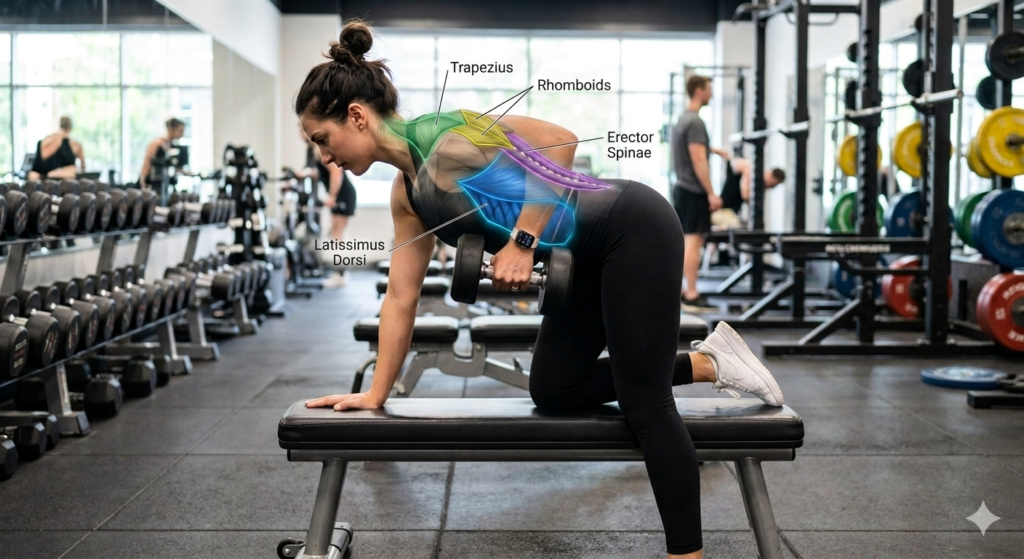
A back workout for women is a structured resistance training routine targeting the muscles of the posterior torso including the latissimus dorsi, rhomboids, trapezius, and erector spinae to build functional strength, correct postural imbalances, and reduce pain caused by sedentary habits or muscular neglect. One important note: this isn’t a cosmetic only endeavour. A strong back directly impacts how you move, sit, stand, lift, and carry through every single day.
Here’s the thing: building your back is the most direct intervention available to you. Not stretching. Not foam rolling. Strength.
According to a 2025 systematic review drawing on Global Burden of Disease Study 2021 data published via PMC an estimated 628.8 million people globally live with low back pain, and women consistently show higher prevalence, incidence, and disability adjusted life years than men across every age group worldwide.
What most guides skip is this: the back is the second largest muscle group in the upper body. Training it burns a substantial number of calories during the session itself, makes it an effective tool for body composition, and directly improves the stability of every other lift in your program.
The Muscles Working When You Do These Moves
Upper Back
The trapezius has three distinct fiber sections upper, mid, and lower and controls how your shoulder blades move. The rhomboids sit between your spine and shoulder blades. They’re what pull your shoulders back when someone tells you to “stand up straight.”
The rear deltoids are technically shoulder muscles, but they drive significant work during any horizontal pulling movement.
Rounded shoulders? That’s almost always weak rhomboids and rear delts not tight chest muscles, despite what every generic stretching article in existence tells you.
Lower Back
The erector spinae runs the full length of your spine. The multifidus sits deeper and stabilizes individual vertebrae. These don’t show in mirror selfies. But they determine whether you can carry groceries, pick up a child, or survive an eight hour workday without pain radiating up your lumbar region.
Lats
The latissimus dorsi is the broadest muscle in your back. Training it creates the visual effect of a smaller waist by widening the upper torso the so called V taper. It also drives almost every pulling movement in daily life, from opening a car door to hoisting luggage overhead.
10 Best Back Exercises for Women
Quick Comparison
| Exercise | Best For | Key Benefit | Limitation |
|---|---|---|---|
| Dumbbell Bent Over Row | Home beginners | Targets lats + rhomboids simultaneously | Needs support surface for heavier loads |
| Lat Pulldown | Gym based training | Builds V taper and pulling strength | Requires cable machine |
| TRX Row | Bodyweight progressions | Fully adjustable difficulty via foot position | Needs TRX or stable rings setup |
| Resistance Band Pull Apart | Warm up / posture work | Zero equipment, great for rear delts | Low load ceiling for advanced lifters |
| Superman Hold | Lower back beginners | Safe erector spinae endurance builder | Resistance doesn’t scale easily |
To complete a full back workout for women at home or in a gym, follow these steps:
- Warm up with 2 sets of band pull aparts or wall angels 90 seconds total.
- Choose 3–4 exercises from the list below based on your available equipment.
- Complete 3 sets of 10–12 reps per movement, with slow, controlled lowering.
- Rest 60–90 seconds between sets, then finish with a cat cow stretch sequence.
Beginner Exercises
1. Dumbbell Bent Over Row Hinge at the hips, spine neutral, pull the dumbbell toward your hip not toward your armpit. That subtle difference routes the load through your lats instead of your biceps. Bowflex SelectTech adjustable dumbbells are worth mentioning here because home progressions become seamless when you don’t have to buy five separate pairs.
2. Seated Cable Row Sit tall. Pull the handle to your lower abdomen. Squeeze your shoulder blades together for a full second before releasing. Most women rush the return the squeeze is where rhomboid activation actually happens.
3. Superman Hold Lie face down, arms extended overhead. Lift your arms, chest, and legs simultaneously. Hold 2–3 seconds. Lower with control. Simple to learn, surprisingly underused, and one of the only exercises that directly challenges the erector spinae without any loading equipment.
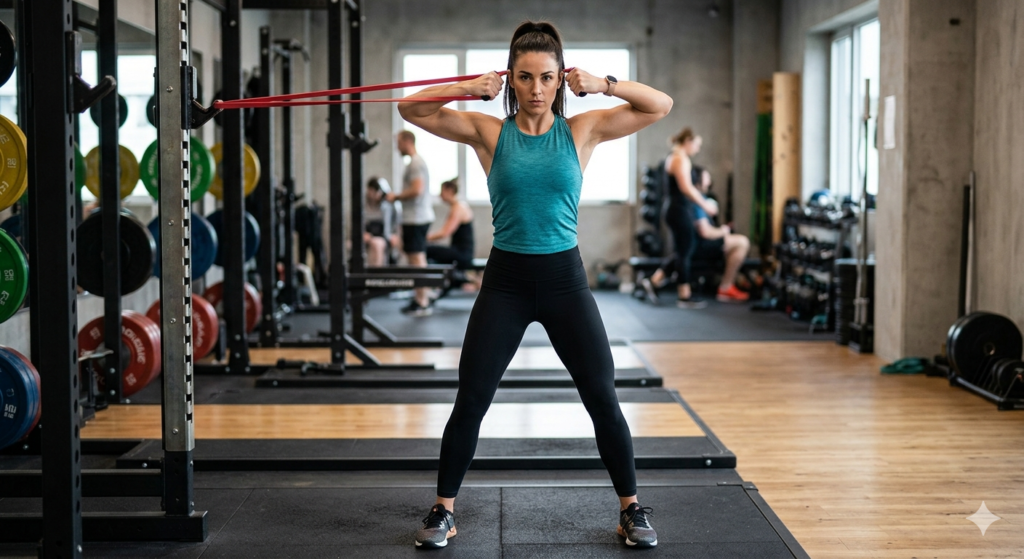
4. Resistance Band Pull Apart Hold a Rogue Fitness resistance band at shoulder height, arms extended straight in front of you. Pull it apart until it touches your chest, squeezing the rear delts hard at the endpoint. An effective warm up or finisher don’t underestimate it because there’s no barbell involved.
5. TRX Row (or Inverted Row under a sturdy table) Set the TRX Suspension Trainer straps to mid length. Lean back with your body in a straight line. Pull your chest to the handles, driving elbows back and squeezing shoulder blades. Difficulty adjusts immediately just by walking your feet forward. It’s arguably the most versatile single piece of home back equipment available.
Intermediate Exercises
6. Lat Pulldown Wide overhand grip, slight lean back, pull the bar to your upper chest. Behind the neck is an injury waiting to happen stop seeing it in videos and copying it.
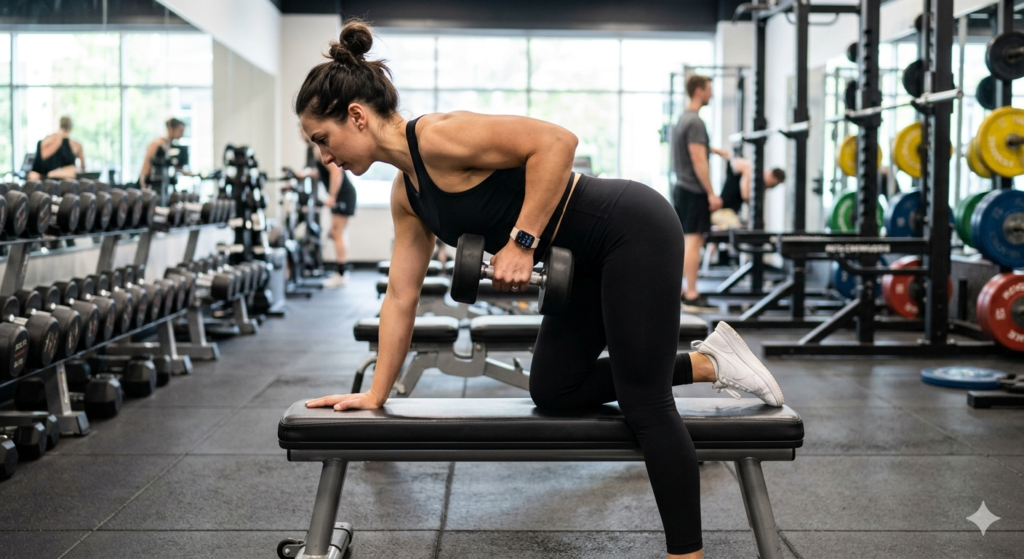
7. Single Arm Dumbbell Row (on bench) One knee on a bench, opposite hand on the pad for support. Pull with your elbow, not your hand. Visualize your hand as a hook your elbow drives everything.
8. Barbell Bent Over Row Compound. Demanding. Rewarding. Hip hinge position, bar pulled to lower chest, elbows tracking back. This is where real back thickness is built over time. If you’re new to barbells, start with just the empty bar form matters more than load here, full stop.
9. Renegade Row High plank position, hands on dumbbells. Row one arm while the other stabilizes the floor.
Quick note: keep your hips square throughout. Rotation means your core has checked out, which defeats the point.
10. Face Pull (cable or resistance band) Pull toward your face with elbows flared high. This isolates rear delts and mid traps in a way no standard row replicates. I’ve seen conflicting data on whether cable face pulls or band pull aparts produce greater rear delt activation some studies favour loaded cable variations, others show band work produces comparable muscle activity at significantly lower injury risk. My read: start with bands to groove the shoulder blade retraction pattern, then progress to cables once that’s automatic.
How to Build a Progressive Back Routine Week by Week
This is exactly where every competitor article stops. They list exercises. They give you sets and reps. Then they leave you alone.
Weeks 1–2 Foundation Phase Choose three beginner exercises. Three sets of ten reps each. Don’t add weight yet these two weeks exist entirely to build the mind muscle connection your back needs before load becomes useful.
Weeks 3–4 Load Introduction When you complete all reps cleanly and the last two feel controlled (not easy controlled), increase dumbbell weight by 2–5 lbs or move to the next band resistance. Add one extra set to your primary compound row.
Weeks 5–8 Volume Build Four exercises now, four sets each. Introduce one intermediate movement. Drop rep range to 8 on your heaviest sets. Your body has adapted it needs a new stimulus.
Weeks 9–12 Intensity Phase Start each session with your hardest exercise while you’re freshest. Introduce drop sets on your primary row: complete your working set, immediately drop 20–30% of the weight, and squeeze out 4–6 more reps. This phase is where visible definition starts to show.
Or maybe I should say it this way: progressive overload isn’t complicated. It’s just systematically asking your back to do slightly more than it did last session. That’s it.
Look if you’ve been doing the same three sets of ten with the same 10 pound dumbbells for six months and nothing has changed, that’s why. You’re not doing anything wrong you’re just not progressing, and that’s on the program, not you. The body adapts. You have to give it a reason to keep adapting.
Your Hormonal Cycle and Back Training
No mainstream fitness site covers this well. Most skip it entirely.
Your menstrual cycle creates measurable fluctuations in strength output, recovery speed, and connective tissue vulnerability. Estrogen peaks during the follicular phase (roughly days 1–14 of your cycle). Research in exercise physiology suggests neuromuscular performance and pain tolerance tend to be higher during this window meaning heavier back sessions, new rep PRs, and more demanding loading protocols are best attempted here.
The luteal phase (days 15–28) brings progesterone dominance. Recovery slows slightly. Joint laxity can increase particularly in the connective tissue surrounding the spine and hips due to the effect of relaxin and progesterone on ligament compliance. This isn’t a reason to skip training. It’s a reason to prioritize form over load, and to add an extra rest day if accumulated fatigue is running high.
Some experts argue that cycle syncing is overhyped and that individual variation renders it impractical as a training variable. That’s a valid position the effect sizes in most studies are modest, and responses vary significantly person to person. But if you’re consistently feeling destroyed by heavy back sessions in the two weeks before your period, adjusting intensity rather than grinding through is a practical, evidence informed choice not an excuse.
Disclaimer: This section reflects general trends in exercise science research, not personalized medical guidance. If you have a diagnosed hormonal condition PCOS, endometriosis, thyroid dysfunction consult your healthcare provider before adjusting your training around your cycle.
Mistakes That Kill Your Back Gains
Pulling with your hands instead of your elbows. This routes effort through your biceps and leaves your back largely uninvolved.
Using weight that’s too heavy before you’ve built any mind muscle connection in the back. Your nervous system needs weeks of lighter work to learn how to fire the right fibers. Most women skip this and then can’t understand why their back never feels worked.
Skipping warm up because you’re short on time. Cold back muscles under load are a reliable path to a strain. Three minutes of band pull aparts and cat cows is not optional.
Never touching lower back exercises. Women disproportionately neglect the erector spinae and multifidus then wonder why eight hours of sitting causes lumbar pain by 3pm. Supermans and bird dogs exist for this exact reason.
Training back once a week at most and expecting meaningful results. Two to three sessions per week, with at least 48 hours between back focused workouts, is the research supported frequency for progressive strength adaptation.
This guide covers general back training for healthy women with no existing spinal conditions. It does not address rehabilitation from disc herniation, scoliosis, spinal stenosis, or post surgical recovery. Always consult a qualified physiotherapist or sports medicine professional for condition specific programming.