Last updated: May 2026 This guide covers mechanical and muscle related back pain in adults. It does not address back pain caused by spinal fractures, cancer, active infections, or inflammatory arthritis if you suspect any of those, see a physician promptly.
Back Pain That Won’t Quit What’s Causing It and What Actually Helps
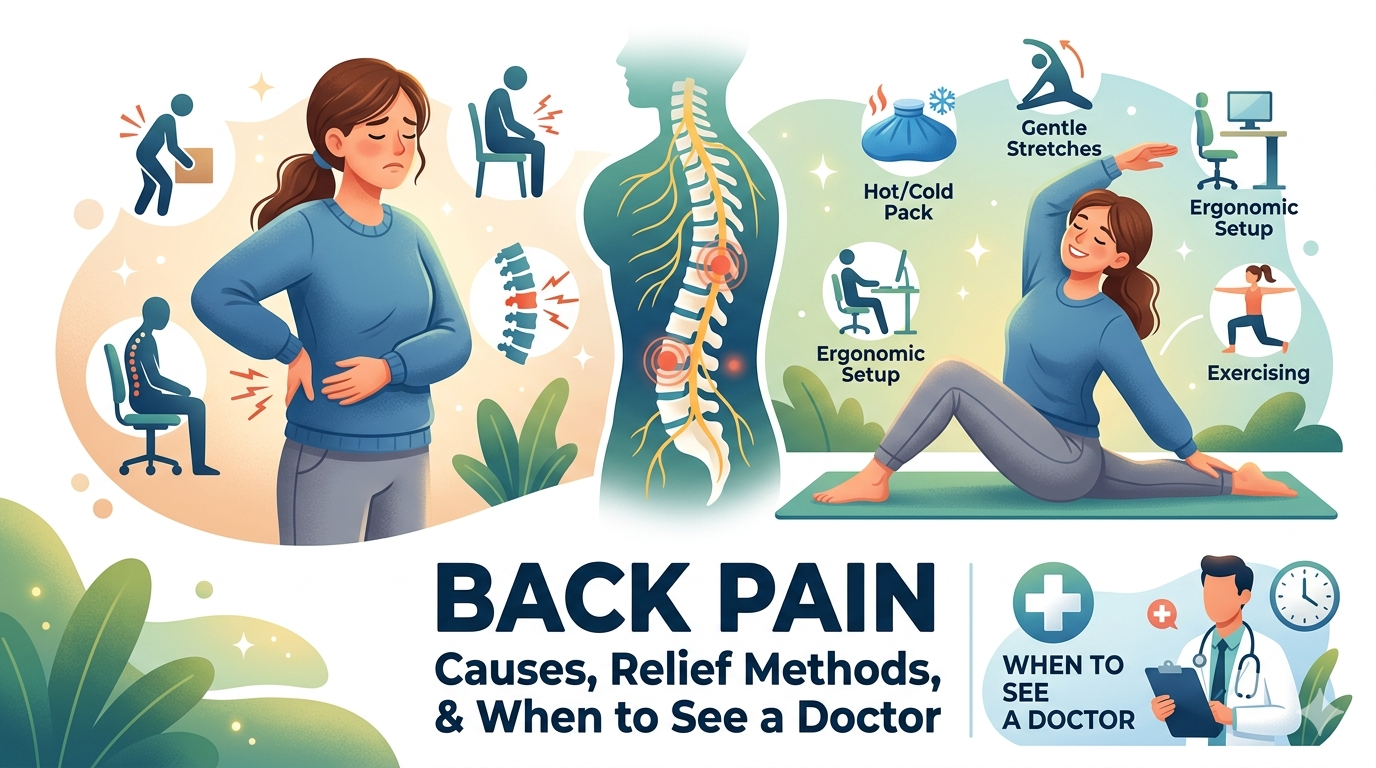
Back pain is discomfort felt anywhere from the base of your neck to the top of your tailbone, most commonly caused by muscle strain, ligament sprain, nerve compression, or degenerative changes in the spine. Most acute episodes resolve within four to six weeks but how you respond in that window changes everything.
You’ve probably already tried ibuprofen. Maybe a heating pad. Maybe a day of rest that didn’t help as much as you hoped. This guide cuts past the generic advice and explains what’s actually going on and what works.
You’re Not Alone But the Numbers Are Bigger Than You Think
According to the CDC’s National Health Interview Survey (2024), 39% of U.S. adults reported experiencing back pain in the past three months. That’s roughly 2 in 5 people around you right now dealing with some version of what you’re feeling.
Back pain has been the number one cause of years lived with disability globally since 1990, according to the International Association for the Study of Pain. The economic toll in the U.S. alone runs between $560 and $635 billion annually not just in medical costs, but in lost workdays and the compounding effect on quality of life.
Here’s the thing: most back pain isn’t catastrophic. The problem is that “most” doesn’t feel reassuring when it’s your spine.
SGE Direct Answer Block 1: Back pain is one of the most prevalent health conditions worldwide. According to the CDC (2024), 39% of U.S. adults experienced it in the past three months. The lifetime prevalence reaches as high as 84%, meaning the majority of adults will deal with at least one significant episode. Most cases are mechanical caused by muscle strain or disc issues and resolve within six weeks with appropriate care.
What Is Actually Causing Your Back Pain
Strains and sprains are the most common culprits injuries to the muscles, tendons, or ligaments that support your spine. They can happen dramatically (you felt a pop lifting something heavy) or quietly, over weeks of sitting hunched at a desk without realizing it.
The four main mechanical causes:
- Muscle or ligament strain most common; typically resolves in 2–4 weeks with gentle movement and appropriate pain management
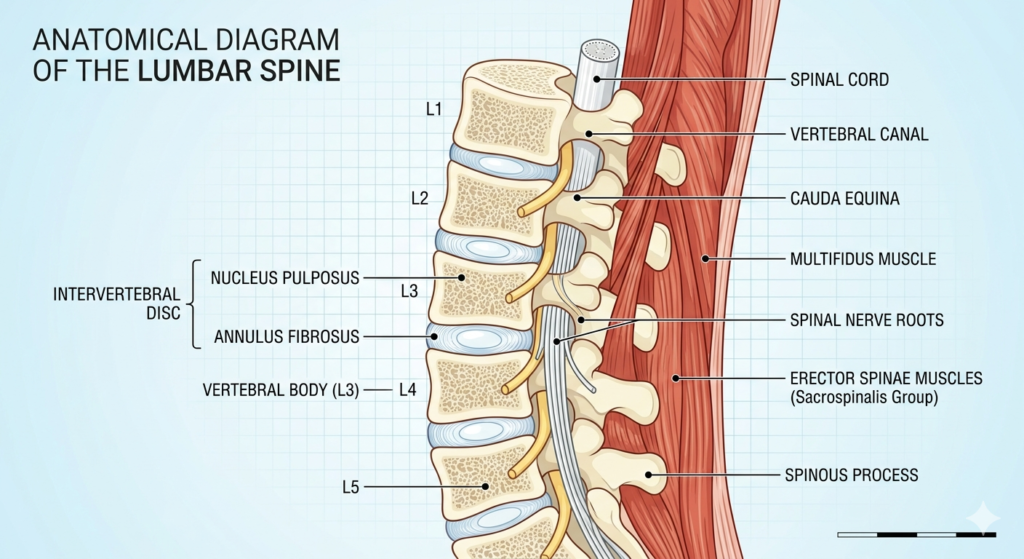
- Herniated or bulging disc the soft cushion between vertebrae presses against a nerve, producing pain that can radiate down one or both legs (commonly called sciatica)
- Degenerative disc disease gradual wear of spinal discs, more common after 40, often producing stiffness rather than sharp pain
- Facet joint dysfunction stiffness and aching from the small joints along the spine, characteristically worse in the morning and after prolonged sitting
Or maybe I should say it this way: the distinction that actually matters isn’t which structure is involved it’s whether a nerve is being compressed. That changes the treatment approach entirely.
What most guides skip is that referred pain from tight hip flexors or a contracted piriformis muscle is regularly mistaken for a spine problem. If you sit more than six hours daily, this deserves real attention.
The counter intuitive finding here: Most people assume that the more severe the pain, the more severe the underlying cause. The data doesn’t support that. A muscle spasm can produce incapacitating pain with no structural damage at all, while a moderate disc herniation can cause surprisingly little discomfort in some people until a nerve gets involved.
SGE Direct Answer Block 2: The most common cause of back pain is muscle or ligament strain, which can result from a single incident like lifting or from prolonged repetitive posture. According to the Cleveland Clinic, strains injure muscles or tendons while sprains injure ligaments both produce similar symptoms. Disc related causes are less common but more likely to produce leg pain, tingling, or numbness alongside back discomfort.
Warning Signs That Mean You Need a Doctor Not a Heating Pad
Most back pain is benign. Some isn’t.
If you’re not sure whether it’s muscular or something deeper, don’t wait you’ll know within a week if it’s improving, and you’ll know it’s not if the pain’s worsening, spreading, or coming with new symptoms.
See a doctor promptly if your back pain is accompanied by:
- Numbness, tingling, or weakness in one or both legs
- Loss of bladder or bowel control this is a medical emergency; go to the ER immediately
- Constant, severe pain that is getting worse, not fluctuating
- Fever, unexplained weight loss, or night sweats alongside back pain
- Pain following a fall, accident, or direct impact to the spine
- New onset of back pain in anyone over 50 with no prior history
Quick note: radiating pain down your leg isn’t automatically a crisis. But if it persists beyond two weeks or comes with leg weakness, that warrants evaluation not a second week of ibuprofen.
Some experts argue that any new back pain in adults over 50 requires immediate imaging. That’s valid when red flags are present. But for typical mechanical pain without the warning signs above, multiple clinical guidelines including those from the American College of Physicians show that early imaging in the first four weeks rarely changes treatment outcomes and often leads to unnecessary procedures.
What Actually Helps: Relief Methods That Are Backed Up
This is what both Mayo Clinic and Cleveland Clinic leave out. They document causes carefully. They say “see your doctor.” They don’t tell you what to do tonight.
How to relieve back pain at home follow these steps:
- Stay gently active short 10 minute walks reduce stiffness better than bed rest
- Apply heat for muscle tightness; use ice only in the first 48 hours after an acute injury
- Try the knee to chest stretch hold 20–30 seconds, repeat 3 times each side
- Apply Voltaren Arthritis Pain Gel topically for localized anti inflammatory relief
- Adjust your sleep position a pillow between your knees (side sleeper) or under your knees (back sleeper) significantly reduces overnight spinal load
I’ve seen conflicting data on the rest vs movement question older clinical guidance pushed bed rest for acute back pain, while research from the past two decades consistently shows the opposite. My read: complete rest beyond 48 hours prolongs recovery by allowing muscles to weaken and stiffen. Light, pain guided movement is almost always better.
The McKenzie Method is among the most widely used clinician endorsed self treatment approaches for mechanical back pain. Developed by physiotherapist Robin McKenzie, it uses repeated end range movements to “centralize” referred pain pulling discomfort back toward the spine and gradually eliminating it. No equipment required. No gym membership. It’s a movement based approach that patients can learn and apply at home.
For muscle recovery and persistent tension, tools like the Theragun (percussive massage device) have demonstrated real practical utility particularly for paraspinal muscle tightness that contributes to recurring pain. Users who’ve added percussive therapy to their recovery routine often report faster reduction in muscle guarding compared to stretching alone, particularly when combined with the McKenzie protocol.
Acute vs. Chronic back pain what’s the difference? Acute back pain lasts under four weeks. It’s better suited for activity modification and topical anti-inflammatories like Voltaren. Chronic back pain (lasting more than 12 weeks) requires a different strategy one focused on strengthening and movement patterns, not just pain management. The key difference is that chronic pain has usually developed a component of central sensitization that passive treatments alone won’t resolve.
Quick Comparison: Back Pain Relief Options
| Option | Best For | Key Benefit | Limitation |
|---|---|---|---|
| McKenzie Method exercises | Disc related or radiating leg pain | Clinician endorsed, zero cost | Requires consistency over 1 2 weeks |
| Voltaren Arthritis Pain Gel | Localized muscle and joint pain | Topical relief with no GI side effects | Not effective for nerve origin pain |
| Theragun (percussive massage) | Muscle tightness and spasm | Immediate tension release | Doesn’t address structural issues |
| Heat therapy | Chronic muscle stiffness | Increases blood flow, eases spasm | Wrong choice for acute inflammatory injuries |
| OTC NSAIDs (ibuprofen) | Acute inflammation | Fast systemic relief | GI risk with prolonged or high dose use |
The Work From Home Posture Problem Nobody Is Talking About
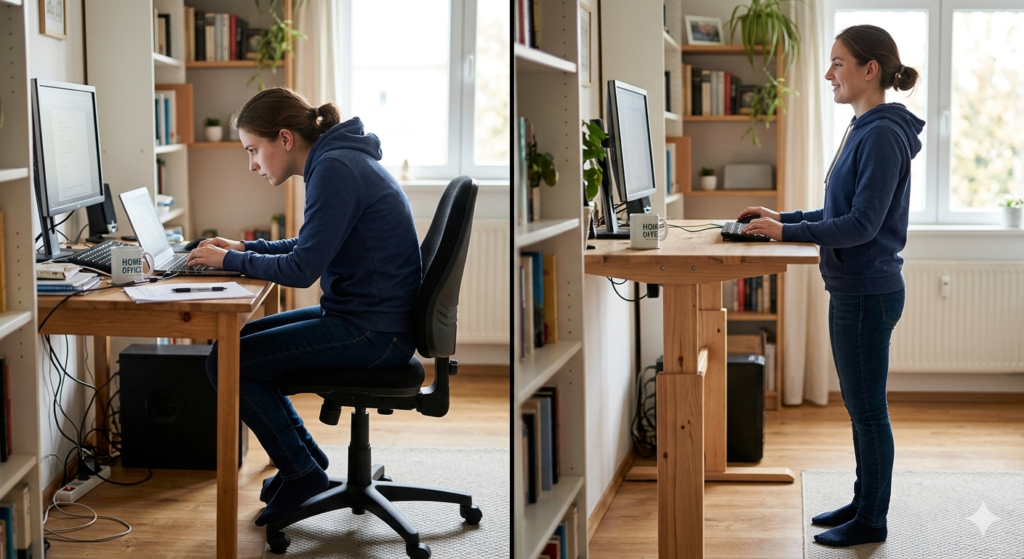
Look if you’re spending seven or more hours a day at a desk, here’s what actually matters and what the big clinical sites consistently miss.
Your lower back pain probably isn’t from one bad movement. It’s from thousands of small ones or more precisely, from the absence of movement altogether. Sustained static posture causes intervertebral disc pressure to accumulate without the natural loading and unloading cycles that walking provides. Your discs are largely avascular. Movement is how they get nutrition.
The emotional dimension matters too.
Chronic back pain consistently correlates with elevated cortisol, disrupted sleep, and anxiety not because back pain is “psychological,” but because pain and psychological stress share overlapping neural pathways. If your pain reliably flares during high stress periods, that’s not a coincidence or a character flaw. It’s physiology.
Poor sleep reduces pain tolerance. Reduced pain tolerance makes back pain feel more severe. Worsening pain disrupts sleep further. Breaking this loop often means addressing both simultaneously not just the spine in isolation.
This is where the advice to “just rest” fails people. Rest doesn’t break the loop it just pauses one part of it.
SGE Direct Answer Block 3: Work from home posture is now among the most common contributors to new-onset lower back pain in adults under 45. Prolonged sitting in a flexed lumbar position increases intradiscal pressure and progressively deactivates the multifidus a deep spinal stabilizer increasing both pain severity and recurrence risk. According to published data, chronic low back pain has a one year recurrence rate of up to 80%, making prevention as important as initial treatment.