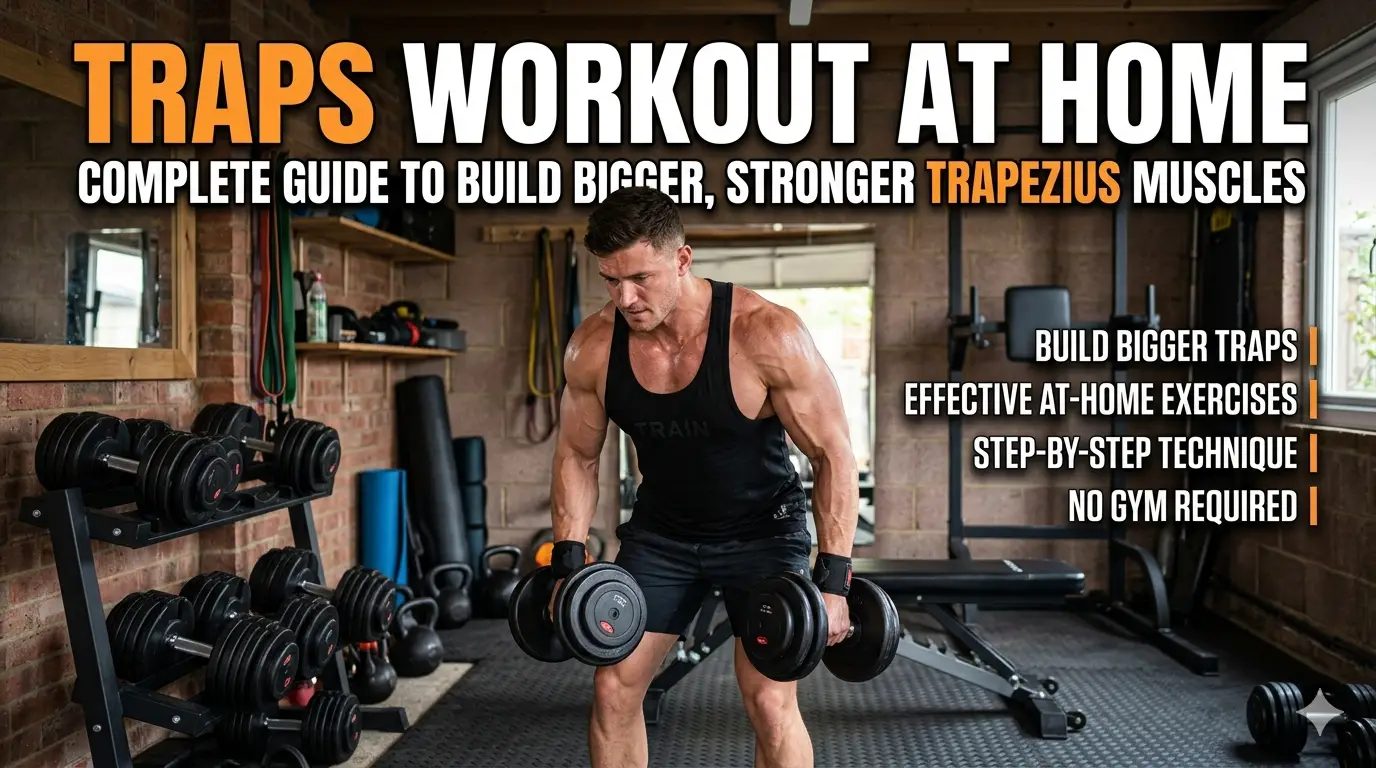
What Is a Traps Workout at Home?
A traps workout at home is a structured routine designed to train the trapezius muscle using bodyweight exercises, dumbbells, resistance bands, or household items without needing a gym.
It focuses on improving upper back strength, posture alignment, and muscle definition using controlled, targeted movements.
Why Training Your Traps Matters More Than You Think
The trapezius muscle plays a critical role in everyday movement. It supports your neck, stabilizes your shoulders, and connects your upper back to your arms.
When trained properly, it helps you:
- Improve posture and reduce slouching
- Build a wider, more powerful upper body
- Prevent neck and shoulder pain
- Enhance overall strength performance
This is especially important for desk workers, athletes, and anyone spending long hours sitting.
Understanding the Trapezius Muscle (Most People Get This Wrong)
The trapezius isn’t just one muscle it has three distinct regions:
| Area | Function | Example Movement |
|---|---|---|
| Upper Traps | Shoulder elevation | Shrugs |
| Middle Traps | Shoulder retraction | Rows |
| Lower Traps | Shoulder depression | Y raises |
Most home workouts focus only on upper traps. That leads to imbalance and limited growth. A complete traps workout must target all three areas.
Best Traps Exercises at Home (No Gym Required)
1. Dumbbell Shrugs (Upper Traps)
- Stand upright with weights
- Lift shoulders straight up (not rolling)
- Hold briefly, then lower slowly
Tip: Focus on control, not heavy weight.
2. Resistance Band Face Pulls (Middle Traps)
- Anchor band at eye level
- Pull toward your face
- Squeeze shoulder blades together
Why it works: Activates middle traps and improves posture.
3. Pike Push-Ups (Upper + Lower Traps)
- Form an inverted “V” shape
- Lower your head toward the floor
- Push back up
Great for combining shoulder and trap activation.
4. Prone Y Raises (Lower Traps)
- Lie face down
- Raise arms in a “Y” shape
- Keep movements slow and controlled
This is one of the most neglected but essential exercises.
5. Farmer’s Carry (Full Trap Engagement)
- Hold heavy objects (dumbbells or bags)
- Walk while keeping shoulders tight
Bonus: Builds grip strength and endurance.
6. Reverse Snow Angels
- Lie face down
- Move arms in a wide arc like making a snow angel
- Keep chest slightly lifted
Targets lower and middle traps effectively.
Complete Traps Workout at Home (Follow This Plan)
Beginner (2 Days/Week)
- Shrugs – 3×12
- Pike Push-Ups – 3×8
- Band Rows – 3×10
Intermediate (3 Days/Week)
- Dumbbell Shrugs – 4×12
- Face Pulls – 3×15
- Reverse Snow Angels – 3×12
- Farmer’s Carry – 3 rounds
Advanced (3–4 Days/Week)
- Heavy Shrugs – 5×10
- Pike Push Ups – 4×10
- Band Pull Aparts – 4×15
- Isometric Holds – 30–60 sec
How to Train Traps at Home for Faster Growth
If your traps aren’t growing, the issue is usually not effort it’s strategy.
Apply Progressive Overload
Gradually increase:
- Weight
- Reps
- Time under tension
Focus on Form First
- Keep movements controlled
- Avoid swinging or jerking
- Squeeze at the top of each rep
Train 2–3 Times Per Week
More isn’t always better. Overtraining traps can lead to fatigue and neck strain.
Use Isometric Holds
Holding the top position for 2–3 seconds increases muscle activation.
Equipment vs No Equipment: What Should You Choose?
| Option | Best For | Limitations |
|---|---|---|
| Bodyweight | Beginners, convenience | Limited resistance |
| Resistance Bands | Budget-friendly training | Less overload potential |
| Dumbbells | Muscle growth | Requires investment |
| Household Items | DIY workouts | Less consistency |
Simple rule:
If you want faster hypertrophy (muscle growth), add resistance.
Common Mistakes That Kill Trap Growth
Avoid these if you want real results:
- Rolling shoulders during shrugs
- Lifting too heavy with poor form
- Ignoring lower traps
- Training every day without recovery
- Using fast, uncontrolled reps
Even small corrections here can dramatically improve results.
Real World Setup: Home Workout Without a Gym
You don’t need a fancy setup. A small space and basic tools are enough.
Minimal Setup Includes:
- Pair of dumbbells or resistance bands
- Floor space (2×2 meters)
- Optional: backpack for added weight
Budget Range (Global Average):
- Resistance bands: low cost entry option
- Dumbbells: moderate investment depending on weight
You can also use water bottles, bags, or books as alternatives.
How Long Does It Take to See Results?
With consistent training:
- Strength improvements: 2–3 weeks
- Visible muscle definition: 4–8 weeks
- Noticeable size increase: 8–12 weeks
Consistency, not complexity, drives results.
Home Workout vs Gym: Which Is Better for Traps?
Home Workout
Pros
- Convenient
- Cost-effective
- Flexible schedule
Cons
- Limited heavy resistance
Gym Training
Pros
- More equipment
- Easier progressive overload
Cons
- Time and cost
Bottom line:
Home workouts can build strong traps if done correctly.
Best Practices for Maximum Results
- Train all three trap regions
- Use slow, controlled reps
- Combine dynamic and static exercises
- Maintain good posture throughout the day
- Track your progress weekly
Conclusion
A well-structured traps workout at home can deliver impressive results without stepping into a gym. The key is targeting all parts of the trapezius, maintaining proper form, and applying progressive overload over time.
Start simple. Stay consistent. Focus on quality movement.
Your traps will follow.