What Is an At Home Dumbbell Workout?
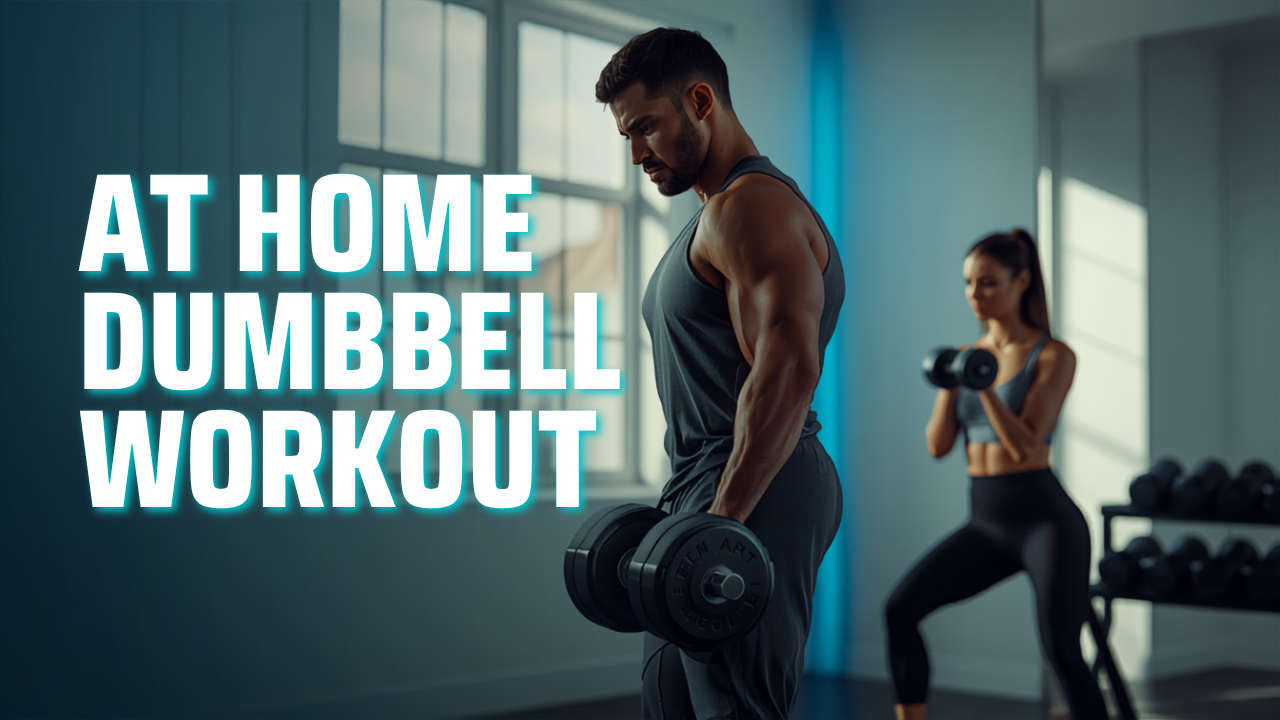
An at home dumbbell workout is a structured strength training routine using dumbbells to target all major muscle groups. It combines compound and isolation exercises to build muscle, improve endurance, and support fat loss without needing a gym.
This approach works because dumbbells allow natural movement patterns, engaging stabilizer muscles and improving overall functional strength.
Why Dumbbell Workouts at Home Actually Work
Many assume you need machines or heavy gym setups. That’s not true.
Dumbbells create resistance, which is the foundation of muscle hypertrophy (muscle growth). When you consistently challenge your muscles through progressive overload, they adapt and grow stronger.
Key Benefits:
- Train anytime without commuting
- Save money on gym memberships
- Improve coordination and balance
- Easily scale intensity for any level
Real world example:
A beginner using 5–10 kg dumbbells consistently can see noticeable strength gains within weeks especially with proper form and progression.
Who Should Follow This Workout?
This routine fits almost everyone:
- Beginners starting fitness at home
- Busy professionals with limited time
- People training in small spaces
- Anyone aiming for fat loss or lean muscle
It’s especially useful if you want flexibility without sacrificing results.
Complete At Home Dumbbell Workout Plan
Full Body Workout (3–4 Days Per Week)
| Exercise | Sets | Reps | Focus |
|---|---|---|---|
| Dumbbell Squats | 3 | 10–15 | Legs & Glutes |
| Dumbbell Floor Press | 3 | 8–12 | Chest |
| Bent-Over Rows | 3 | 10–12 | Back |
| Shoulder Press | 3 | 8–12 | Shoulders |
| Dumbbell Deadlifts | 3 | 10–12 | Hamstrings |
| Bicep Curls | 2–3 | 10–15 | Arms |
| Tricep Extensions | 2–3 | 10–15 | Arms |
Tip: Rest 30–90 seconds between sets depending on your goal.
Step by Step How to Do a Dumbbell Workout at Home
1. Start With a Warm Up (5–10 minutes)
- Jumping jacks
- Arm circles
- Bodyweight squats
2. Perform Compound Exercises First
These include squats, presses, and rows. They use multiple joints and burn more calories.
3. Add Isolation Exercises
Focus on arms or shoulders after major lifts.
4. Maintain Proper Form
- Keep your core tight
- Avoid swinging weights
- Control both lifting and lowering
5. Finish With Cooldown
Stretch major muscle groups to reduce soreness.
20, 30, and 45 Minute Workout Options
20 Minute Quick Workout (Busy Days)
- Squats 3 sets
- Shoulder Press 3 sets
- Rows 3 sets
Minimal rest, higher intensity.
30 Minute Balanced Routine
- Full body workout (5 exercises)
- Moderate rest
- Focus on control and form
45 Minute Advanced Session
- Full routine with all exercises
- Add supersets (back to back exercises)
- Include core training
Beginner to Advanced Progression System
Beginner
- Light weights
- Focus on learning form
- 2–3 workouts per week
Intermediate
- Increase reps and sets
- Add more exercises
- Use time under tension (slow reps)
Advanced
- Heavier weights
- Supersets and circuit training
- Shorter rest periods
Progression rule:
If you can easily complete all reps, increase weight or reps next session.
Choosing the Right Dumbbells
Types Available:
- Fixed dumbbells
- Adjustable dumbbells
- Selectorized sets
Pricing Guide (Global Range)
| Category | Price Range |
|---|---|
| Budget | $20 – $100 |
| Mid Range | $100 – $300 |
| Premium | $300+ |
Buying tip: Adjustable dumbbells are best for home use because they save space and allow progression.
Best Dumbbell Exercises at Home
Compound Exercises (Priority)
- Dumbbell squats
- Deadlifts
- Chest press
- Rows
Isolation Exercises
- Bicep curls
- Tricep extensions
- Lateral raises
Core Exercises
- Dumbbell Russian twists
- Weighted sit-ups
- Plank with dumbbell drag
Dumbbells vs Bodyweight vs Machines
| Feature | Dumbbells | Bodyweight | Machines |
|---|---|---|---|
| Muscle Growth | High | Moderate | High |
| Flexibility | High | High | Low |
| Cost | Moderate | Free | Expensive |
| Skill Required | Medium | Low | Low |
Bottom line:
Dumbbells offer the best balance between effectiveness and flexibility.
Common Mistakes That Slow Progress
Avoid these if you want results:
- Lifting too heavy too soon
- Ignoring proper form
- Skipping warm ups
- Not following a structured plan
- Training inconsistently
Best Practices for Faster Results
- Train at least 3–5 times per week
- Track your reps and weights
- Focus on progressive overload
- Maintain a protein-rich diet
- Prioritize sleep and recovery
Real Life Use Case
Scenario:
A remote worker with limited time trains 30 minutes, 4 times per week using adjustable dumbbells.
Result:
Within 6–8 weeks, improved strength, better posture, and visible muscle tone.
Consistency not complexity drives results.
Are Dumbbells Enough for Full Body Training?
Yes. Dumbbells can effectively train every major muscle group when used correctly.
You don’t need machines if your program includes:
- Squats (legs)
- Presses (chest/shoulders)
- Rows (back)
- Isolation work (arms/core)
Safety Tips to Prevent Injury
- Always warm up
- Start with manageable weights
- Keep your back neutral
- Avoid jerky movements
- Stop if you feel sharp pain
Conclusion
An at home dumbbell workout is one of the most practical and effective ways to build strength, burn fat, and stay consistent no gym required. Start simple. Focus on form. Progress gradually.
Action Steps:
- Choose a beginner routine
- Train at least 3 times this week
- Track your progress
- Increase intensity over time
Stay consistent, and results will follow.