What Is a Glute Workout at Home?
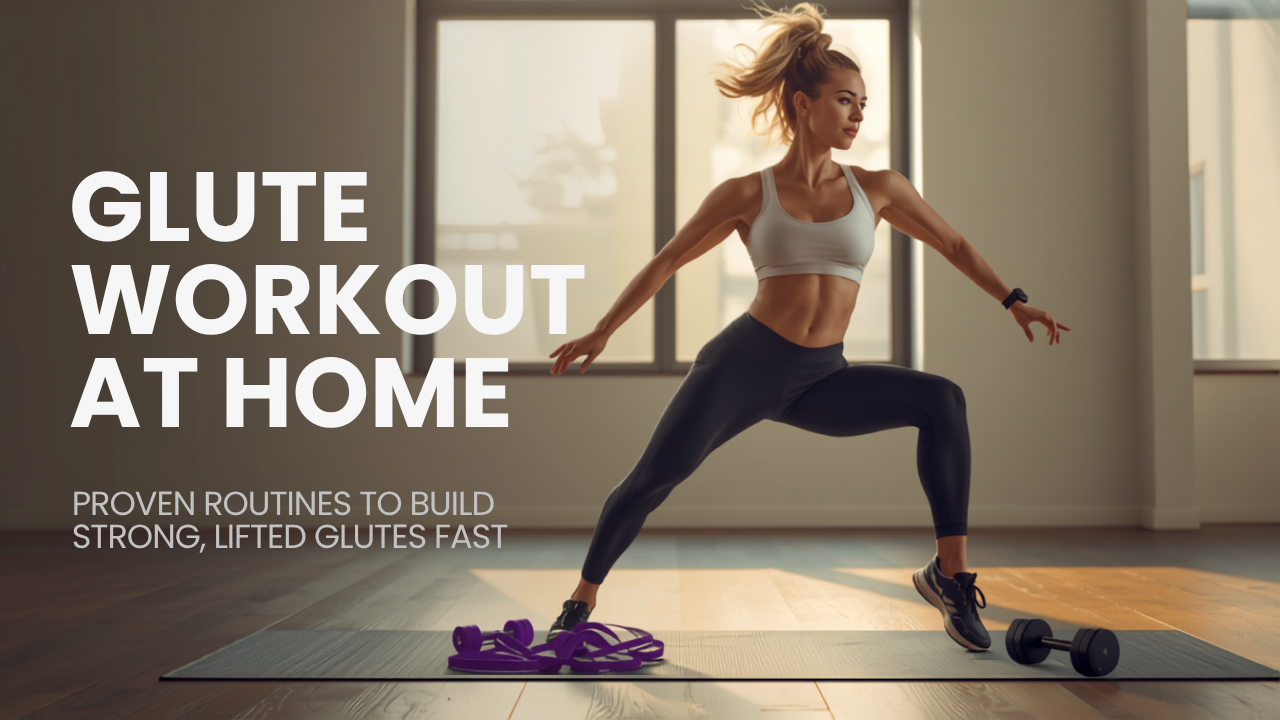
A glute workout at home is a structured routine designed to strengthen and grow your glute muscles using bodyweight exercises or minimal equipment like resistance bands or dumbbells.
It focuses on activating and developing the gluteus maximus, gluteus medius, and gluteus minimus the muscles responsible for hip movement, stability, and overall lower body strength.
Why Glute Training Matters More Than You Think
Strong glutes are not just about appearance. They play a critical role in how your body moves and performs daily tasks.
Key Benefits
- Improved strength for lifting, running, and jumping
- Better posture and reduced lower back strain
- Enhanced balance and stability
- Aesthetic shape and muscle definition
If you sit a lot during the day, your glutes can become inactive. This is where targeted home workouts become essential.
Understanding Glute Anatomy (Simplified)
| Muscle | Function | Best Exercises |
|---|---|---|
| Gluteus Maximus | Hip extension & power | Squats, hip thrusts |
| Gluteus Medius | Stability & balance | Side leg raises, band walks |
| Gluteus Minimus | Support & rotation | Clamshells |
Training all three ensures balanced development and better results.
Best Glute Exercises at Home
These exercises form the foundation of any effective home glute workout.
1. Squats
A compound movement that targets the entire lower body.
Focus on depth and controlled movement.
2. Glute Bridges
Perfect for beginners. Squeeze your glutes at the top for maximum activation.
3. Hip Thrusts
One of the most effective exercises for glute growth. Use a sofa or bench for support.
4. Lunges
Great for unilateral strength and balance. Helps correct muscle imbalances.
5. Donkey Kicks
Isolates the glutes. Ideal for activation and finishing sets.
6. Fire Hydrants
Targets the gluteus medius. Helps improve hip stability.
Glute Bridge vs Hip Thrust: Which Is Better?
| Feature | Glute Bridge | Hip Thrust |
|---|---|---|
| Difficulty | Beginner friendly | Intermediate |
| Range of Motion | Limited | Greater |
| Muscle Activation | Moderate | High |
| Equipment Needed | None | Bench/Platform |
Verdict: Start with glute bridges. Progress to hip thrusts for better growth.
Complete Glute Workout Plan at Home
Beginner Routine (3 Days/Week)
- Squats 3 sets × 12 reps
- Glute Bridges 3 × 15
- Lunges 2 × 10 each leg
- Donkey Kicks 2 × 12
Intermediate Routine
- Hip Thrusts 4 × 12
- Bulgarian Split Squats 3 × 10
- Step Ups 3 × 12
- Fire Hydrants 3 × 15
Advanced Routine
- Single Leg Hip Thrusts 4 × 10
- Jump Squats 3 × 12
- Resistance Band Walks 3 × 20 steps
- Weighted Lunges 4 × 12
Step by Step How to Do a Glute Workout at Home
- Warm up (5–10 minutes)
Activate muscles with light movements like bodyweight squats or band walks - Start with compound exercises
Focus on squats or lunges for maximum impact - Add isolation exercises
Include glute bridges or donkey kicks - Control your tempo
Slow reps increase time under tension - Finish with burnout sets
High-rep sets to fully fatigue the muscles
The Secret to Growth Progressive Overload
If you’re not progressing, your glutes won’t grow.
Ways to Apply It
- Increase reps or sets
- Add resistance bands or weights
- Slow down movement (time under tension)
- Try single-leg variations
Consistency + progression = results.
Weekly Training Frequency
| Goal | Frequency |
|---|---|
| Beginner | 2–3 times/week |
| Intermediate | 3–4 times/week |
| Advanced | 4–5 times/week |
Allow at least 48 hours of recovery between sessions.
Equipment vs No Equipment What Should You Choose?
No Equipment Training
Pros:
- Free
- Beginner friendly
- Flexible
Cons:
- Limited resistance
- Slower progression
With Equipment
Pros:
- Faster muscle growth
- More variety
- Better overload
Cons:
- Requires investment
Essential Home Equipment
- Resistance bands
- Dumbbells
- Step platform or bench
Typical Price Range (Global)
- Resistance bands: $10–$40
- Dumbbells: $30–$200
For budget buyers, resistance bands offer the best value.
Common Mistakes That Kill Your Progress
Avoid these if you want real results:
- Skipping warm ups poor muscle activation
- Using bad form reduced effectiveness
- Training too often no recovery
- Ignoring nutrition no muscle growth
- Not tracking progress no improvement
Real World Scenario Why People Fail
Many people do random workouts from social media without structure.
Example:
Doing 100 squats daily without progression may feel productive—but it won’t build muscle effectively.
What works instead:
A structured plan with progressive overload and proper recovery.
Pro Tips for Faster Glute Growth
- Focus on mind muscle connection
- Squeeze at the top of each rep
- Keep workouts consistent
- Eat enough protein
- Prioritize rest and recovery
Small improvements in technique often lead to big results.
Nutrition for Glute Growth
Training alone isn’t enough.
Key Principles
- Eat sufficient protein (muscle repair)
- Maintain a slight calorie surplus (for growth)
- Stay hydrated
Without proper nutrition, results will be limited.
Home Workout vs Gym Which Is Better?
| Factor | Home Workout | Gym |
|---|---|---|
| Cost | Low | High |
| Convenience | High | Medium |
| Equipment | Limited | Extensive |
| Growth Potential | Moderate–High | High |
Conclusion: Home workouts are highly effective, especially when structured correctly.
Small Space? No Problem
You don’t need a large area to train effectively.
Ideal for:
- Apartments
- Dorm rooms
- Small homes
Focus on exercises like:
- Glute bridges
- Lunges
- Band walks
Can You Really Build Glutes at Home?
Yes when you follow a structured plan, apply progressive overload, and stay consistent.
Home workouts may take slightly longer than gym training, but they absolutely work.
Conclusion
A well designed glute workout at home can deliver impressive results without stepping into a gym. The key lies in consistency, proper technique, and gradual progression.Start simple. Master the basics. Then increase intensity over time.If you stay committed, your strength, shape, and confidence will follow.