
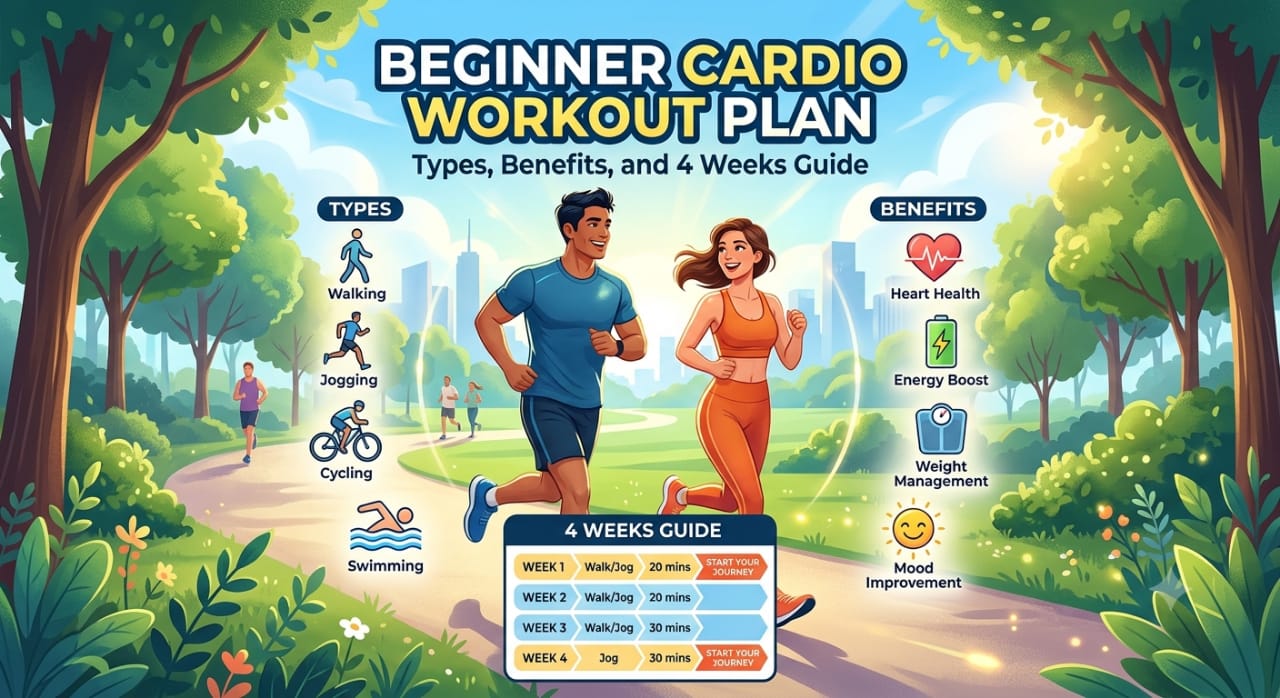
Health disclaimer: If you have a pre existing heart condition, joint issues, or haven’t exercised in over a year, consult a doctor before starting a cardio program.
INTRODUCTION
It can be a struggle to begin a fitness regime, particularly if you’re new to working out. Many people believe you have to engage in difficult activities and training to get fit, but easy exercises can produce great results. Over time, the right fitness program can increase your health, you can provide extra energy and you can boost confidence as well.
If you’re a fitness beginner, a Cardio Workout for Beginners is perfect because it targets simple exercises that boost your heart health and fitness. Cardio exercises get your heart pumping and help your body work to better utilize oxygen. Walking, cycling, swimming, and dancing are simple activities for those who are beginning to walk.
Higher degrees of cardio activity may help in weight maintenance, decrease stress, enhance sleep and make doing tasks easier. Thus, it is possible to attain use to training without being rushed in by beginning and gradually developing stamina within the course of four weeks with a proper arrangement.
What Is Cardio Exercise? And How Is It Appropriate For the Beginning?
Cardio exercise can be any form of activity that raises your heart rate and helps to make your heart and lungs work after them. Exercises enhance blood flow and endurance in the body, which makes it stronger.
Cardio is one of the simplest methods of getting active for beginners. It doesn’t require expensive machines and advanced skills to get started. Walking, light jogging or home-based cardio exercises can offer many health benefits.
Cardio is key since it will help you perform better in your daily routine. As fitness improves, things such as walking further or going up and down stairs are easier.
One more perquisites of cardiovascular exercise is that it advantages mental wellness. Physical activity is known to reduce daily stress, enhance mood and increase the sense of energy. When we make a regular cardio program, both physical, and also mental health advantages are going to improve.
Different Types of Cardio Exercises for Beginners
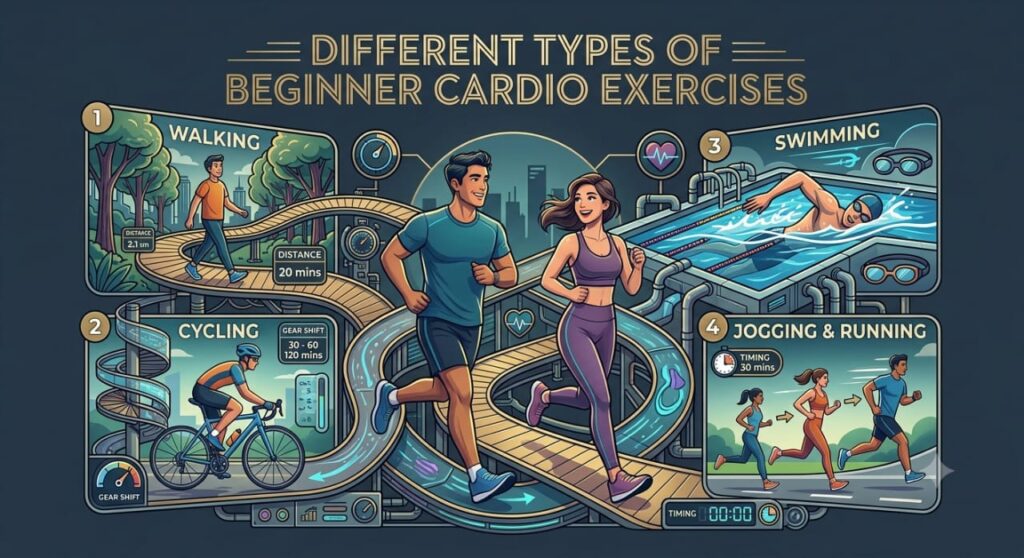
There are various ways to get a workout from the cardio section that are perfect for beginners. Activity selection is to be based on fitness level, individual interest, and lifestyle.
One of the best ways to start exercising is walking. A quick pace can get your heart rate up while keeping you most comfortable. So easy, free and can be done just about anywhere.
Another way is to see how effective cycling is. It aids in building up the strength of the legs, elevating endurance and is non debilitating on the joints. Short cycling durations are great for beginners to begin with and slowly work up to longer durations.
Swimming is a whole body cardio workout which activates different muscle groups simultaneously. It’s suitable for those looking for low impact exercise.
Dance is also a great form of aerobic exercise. Dance exercise enhances co-ordination, helps to burn calories and exercise may be enjoyable.
Stair climbing, light jogging, jumping rope and aerobic exercises are also options for the beginning exerciser. The most effective exercise is the one you will do on a regular basis and enjoy doing!
Benefits Cardio Workouts Beginners
There are plenty of advantages to a Cardio Workout for Beginners for the body and mind. One of the best advantages is a healthier heart. Moderate aerobic activity strengthens and makes the heart work more efficiently.
Cardio workouts also promote calorie burning and weight loss. If fit and proper food habits are incorporated with regular movement it can help to promote a balanced lifestyle.
There’s another higher level gain which is enhanced vitality. Some individuals find that if they adopt the habit of regular physical activity, they get to feel much more active and much less exhausted.
Cardio also builds up strength in your lungs. Your body adapts over time to become more efficient in the use of oxygen, leading to an increase in capacities of endurance during exercise and during everyday physical activity.
Also important is mental health benefits. Regular exercise helps to suppress the nervous system and raise the feeling of happiness. Setting small goals indicated in fitness increases confidence levels in many.
Cardio exercise will also help to enhance the quality of sleep. A healthy exercise program has a relaxing effect on the body and promotes a better sleep pattern.
4 Week Cardio Workout Plan for Beginners
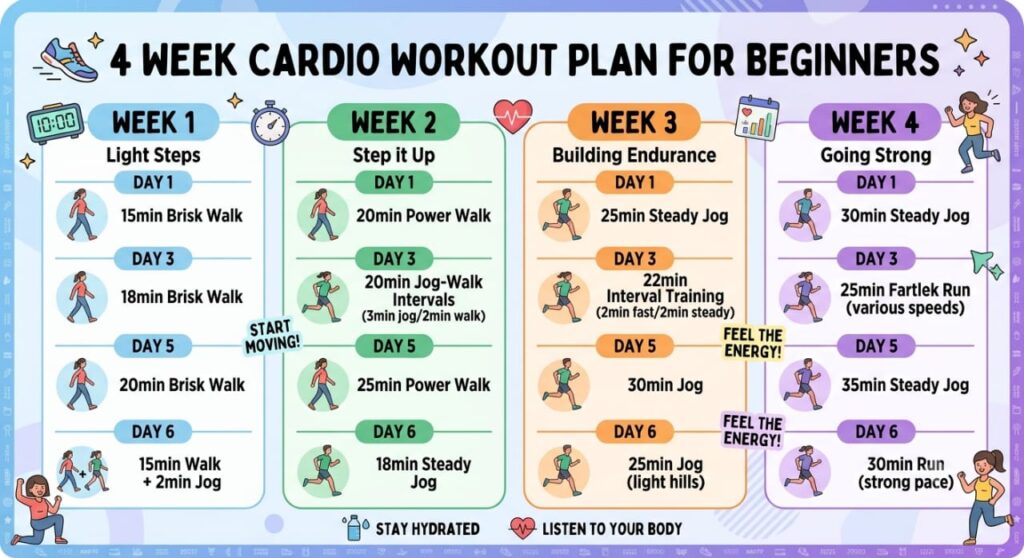
For a beginner, steady improvement is the best approach; do not do too much initially. This is a 4 week program to help develop fitness gradually.
Week 1: Begin at Level 1 Multi-Activity Play
The first week is to build a habit of exercising.
- Walk for 20 – 30 minutes
- Exercise 4 to 5 days a week
- Include early or post-exercise stretching
- The purpose is to allow your body to get used to the activity.
Week 2: Up the total duration of the workout
In the second week, slowly increase your activity level.
- Exercise 30 – 35 minutes
- Include more walking or brief periods of jogging
- Consider bikes or simple exercises at home.Consider changing from bikes or simple home workouts.
- This will increase confidence and stamina.
Week 3: Build Endurance
- In week 3 concentrate on fitness!
- Complete 35-40 minute exercises.
- Include brief intervals of greater intensity
- Include a variety of fitness activities
- Mixing up the exercises makes training interesting and fun.
Week 4, we will compose a long term routine
The last week is dedicated to continuing a fitness lifestyle.
- Workout for 40 – 45 minutes
- Mix exercise with various exercise activities
- Make future fitness targets
Once this four week period, the novices can continue to build strength and endurance.
Some strategies to improve your cardiovascular exercises:
- Always warm-up exercise before performing exercise at a high intensity.
- A few minutes of light activity will prime your muscles and lessen the risk of injury.
- Drink plenty of water before, during and after exercise.
- Consuming sufficient water boosts your body’s functioning.
- Dress appropriately for exercise in a comfortable pair of shoes.
- When exercising more safely and comfortably with proper equipment.
- Don’t compare yourself to others. We all progress through life at our own pace.
- Keep working on her own goal and be consistent.
- Staying connected with workout activities can also aid motivation.
- Keeping track of activity time and progress can help to illustrate achievement.
Frequently Asked Questions
What exercises should beginners focus on for cardio exercise?
Skippers who are just beginning should work up to about 20 to 30 minutes a session. Exercisers can gradually build up how long they should exercise as they become fitter. Consistency is the most important thing not to work really really long workouts.
Is it better to lose weight through dieting or exercise?
Yes, cardio is an aid in weight management as it provides calories burn and healthier metabolism boosting. Exercise should be done in addition to healthy eating and lifestyle changes for optimal effectiveness.
Is it possible for a beginner to perform cardio exercises at home?
Yes, there are a lot of cardio workouts that can be done at home. A couple of basic activities like walking in place, dancing, or jumping exercises are easy activities to do without gym equipment, and beginner workout videos are available.
What is the amount of cardio for beginners per week?
3 days to 5 days a week is recommended for beginners. It is important to have rest days because they enable the body to recover and not get tired.
When will cardio exercise pay off?
Within 2life weeks people notice changes in energy and stamina. Larger changes are typically ones that will take time, healthy eating and regular exercise.
Conclusion
Cardio Workout for Beginners is just a beginner simple cardiovascular workout to help improve fitness, reinforce the heart and build up a healthier way of life. These can be started when you are a beginner and gradually difficult levels can be added.
This four week plan is designed to help your child gain confidence and consistency while not making exercise seem challenging. While cardio may not seem like a lot of fun, anyone can make it enjoyable with dedication and the proper strategy.



Test, message – Thank you!