What Is a Hamstring Workout at Home?
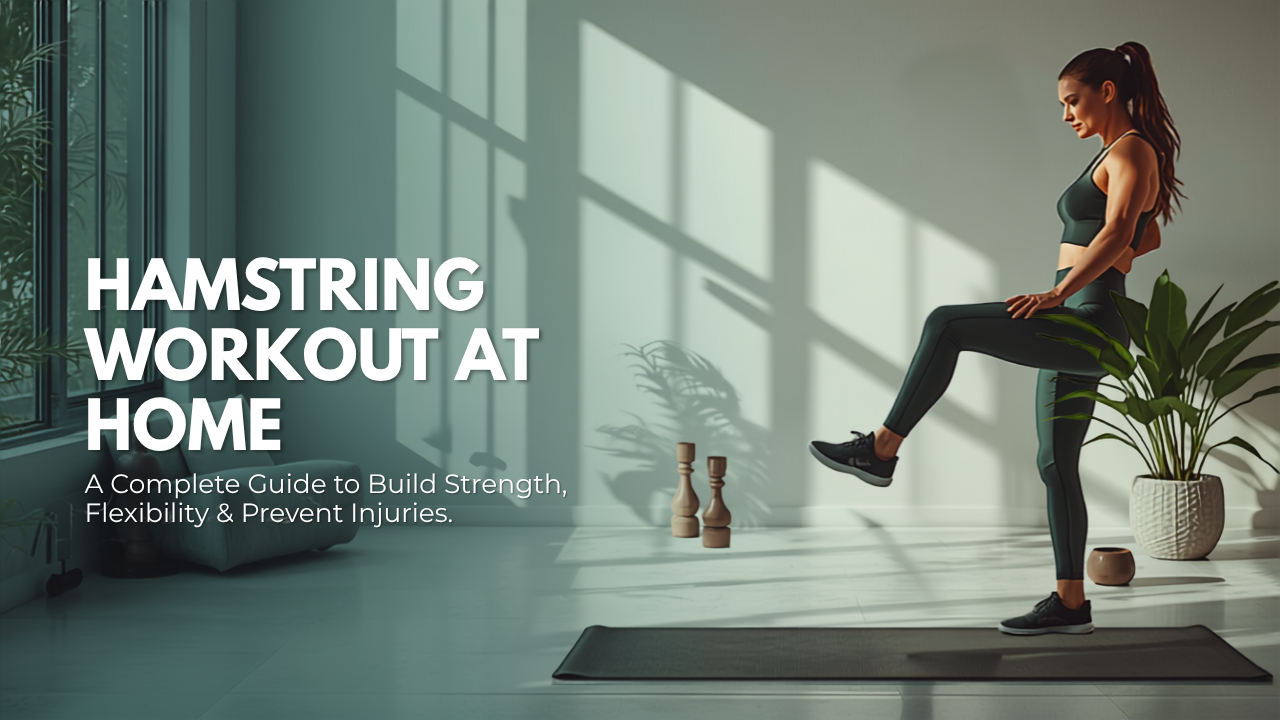
A hamstring workout at home focuses on strengthening the muscles at the back of your thighs using bodyweight or simple tools like resistance bands or dumbbells. It targets the posterior chain to improve strength, flexibility, and injury resistance without needing a gym.
Why Hamstring Training Matters More Than You Think
Hamstrings don’t just help you run or jump they stabilize your entire lower body. When they’re weak or tight, problems show up fast.
Key Benefits
- Improves lower body strength and balance
- Reduces risk of injury, especially strains
- Supports knee and hip stability
- Enhances posture and movement efficiency
Real World Example
If you sit most of the day, your hip flexors tighten while hamstrings weaken. This creates a muscle imbalance that leads to lower back discomfort and reduced mobility.
Understanding the Hamstrings (Simple Breakdown)
The hamstrings include three muscles that run along the back of your thigh and connect the hips to the knees.
They work together to:
- Bend the knee
- Extend the hip
- Stabilize movement
They also work closely with the glutes and quadriceps, forming the foundation of the posterior chain.
Best Hamstring Exercises at Home
Here are the most effective exercises you can do without a gym.
1. Glute Bridge
A beginner friendly move that activates both hamstrings and glutes.
How to do it:
- Lie on your back, knees bent
- Push through your heels
- Lift your hips upward
- Squeeze at the top
2. Romanian Deadlift (RDL)
One of the best exercises for building hamstring strength and stretch.
Tip: Use dumbbells or even a backpack filled with books.
3. Nordic Hamstring Curl
Highly effective for eccentric training and injury prevention.
How to do it:
- Anchor your feet under a sofa or bed
- Slowly lower your body forward
- Use your hands to catch yourself if needed
4. Single Leg Deadlift
Great for improving balance and fixing muscle imbalances.
5. Towel Hamstring Curl
Perfect for smooth floors.
How it works:
- Place your heels on a towel
- Slide your legs in and out while lifting hips
6. Resistance Band Leg Curl
A simple yet effective option for controlled resistance.
7. Good Mornings
Focuses on the hip hinge movement pattern.
Complete Hamstring Workout Plans
Beginner Routine (3 Days/Week)
- Glute Bridges 3×12
- Bodyweight RDL 3×10
- Towel Curls 2×12
Intermediate Routine
- Single Leg Deadlift 3×10
- Nordic Curl 3×6
- Resistance Band Curl 3×12
Advanced Routine
- Weighted RDL 4×8
- Nordic Curl 4×6
- Single-Leg Bridge 3×12
10 Minute Quick Hamstring Workout (Busy Days)
If you’re short on time, this routine still delivers results:
- Glute Bridges 1 minute
- Bodyweight RDL 1 minute
- Towel Curls 1 minute
- Rest 30 seconds
Repeat 3 rounds.
No Equipment vs Minimal Equipment: What’s Better?
| Option | Pros | Cons |
|---|---|---|
| No Equipment | Accessible anywhere | Slower strength gains |
| Resistance Bands | Affordable, portable | Limited max resistance |
| Dumbbells | Best for strength | Higher cost |
Decision Tip:
Start with bodyweight, then add resistance for faster progress.
How to Progress Your Hamstring Training
To build muscle and strength, progression is essential.
Simple Progression Plan
- Increase repetitions
- Add resistance
- Use single leg variations
- Slow down the lowering phase (eccentric training)
- Increase workout frequency (2–3 times/week)
Common Mistakes That Slow Your Progress
Avoid these to get better results faster:
- Skipping warm ups
- Using poor hip hinge form
- Training only with light exercises
- Ignoring eccentric movements
- Overtraining without recovery
Injury Prevention & Recovery
Hamstrings are prone to strains, especially during sudden movements.
How to Stay Safe
- Warm up with dynamic stretches
- Include eccentric exercises like Nordic curls
- Stretch after workouts
- Rest at least 48 hours between sessions
Warning Signs
- Sharp pain in the back of the thigh
- Tightness during movement
- Reduced flexibility
If you notice these, reduce intensity and focus on recovery.
Flexibility & Mobility: The Missing Piece
Strength alone isn’t enough. Flexibility keeps your hamstrings functional.
Add These After Workouts
- Standing hamstring stretch
- Seated forward fold
- Dynamic leg swings
This improves mobility and reduces stiffness.
Who Should Do Hamstring Workouts at Home?
This training works for:
- Beginners starting fitness at home
- Athletes improving performance
- Runners preventing injuries
- Office workers fixing tight hamstrings
- Anyone with limited gym access
Budget Friendly Home Setup
You don’t need expensive equipment.
Basic Setup
- Resistance bands (low cost)
- Dumbbells (optional)
- Yoga mat
Cost Insight
- Bands are usually affordable globally
- Dumbbells vary depending on weight and region
Alternatives & Modifications
If You’re a Beginner
- Use assisted Nordic curls
- Reduce range of motion
If You Want More Challenge
- Add weights
- Slow tempo
- Increase sets
Practical Use Case
Imagine training in a small apartment with no equipment. You can still build strong hamstrings using glute bridges, towel curls, and single leg movements. With consistency, results show within weeks.
Conclusion
Training your hamstrings at home doesn’t require complex equipment or long sessions. What matters is consistency, proper form, and gradual progression. Start simple. Focus on mastering key movements like glute bridges and Romanian deadlifts. Add resistance over time. Stay consistent, and you’ll build stronger, more flexible hamstrings while reducing your risk of injury.