What Is an At Home Hamstring Workout?
An at home hamstring workout is a targeted lower body routine designed to strengthen the muscles at the back of your thighs using bodyweight, resistance bands, or simple equipment. It focuses on two key movements:
- Hip hinge (like deadlifts)
- Knee flexion (like leg curls)
This combination helps build strength, improve flexibility, and protect your lower body from injuries.
Why Training Hamstrings at Home Matters
Hamstrings are part of your posterior chain, working alongside your glutes and lower back. When they’re weak, your body compensates and that’s where problems begin.
Key Benefits
- Reduces risk of muscle strains and knee injuries
- Improves posture and spinal support
- Boosts athletic performance (running, jumping)
- Enhances lower body strength and stability
Real World Insight
If your quads are stronger than your hamstrings, you’re more likely to experience imbalances. This is one of the leading causes of tightness, discomfort, and poor movement patterns.
Understanding Hamstring Activation (Why You Might Not Feel It)
A common frustration: “I don’t feel my hamstrings working.”
Here’s why that happens:
- Overactive glutes or lower back
- Poor hip hinge technique
- Rushing through reps
- Lack of eccentric control
Fix It Fast
- Slow down the lowering phase
- Focus on stretching the hamstrings under tension
- Keep your core engaged and back neutral
Best At Home Hamstring Exercises
Below are the most effective exercises you can do anywhere from small apartments to full home gyms.
1. Glute Bridge (Beginner Foundation)
- Lie on your back, feet flat
- Push hips upward
- Squeeze at the top
Why it works: Activates hamstrings and glutes without stress on joints
2. Romanian Deadlift (Hip Hinge Mastery)
- Hold dumbbells or use bodyweight
- Push hips back while keeping back straight
- Lower slowly until stretch is felt
Pro Tip: The deeper the stretch (without rounding your back), the more hamstring activation you get.
3. Nordic Hamstring Curl (Advanced Strength Builder)
- Anchor your feet under furniture
- Lower your body slowly forward
- Push back up with control
Why it’s powerful: One of the best exercises for eccentric loading and injury prevention
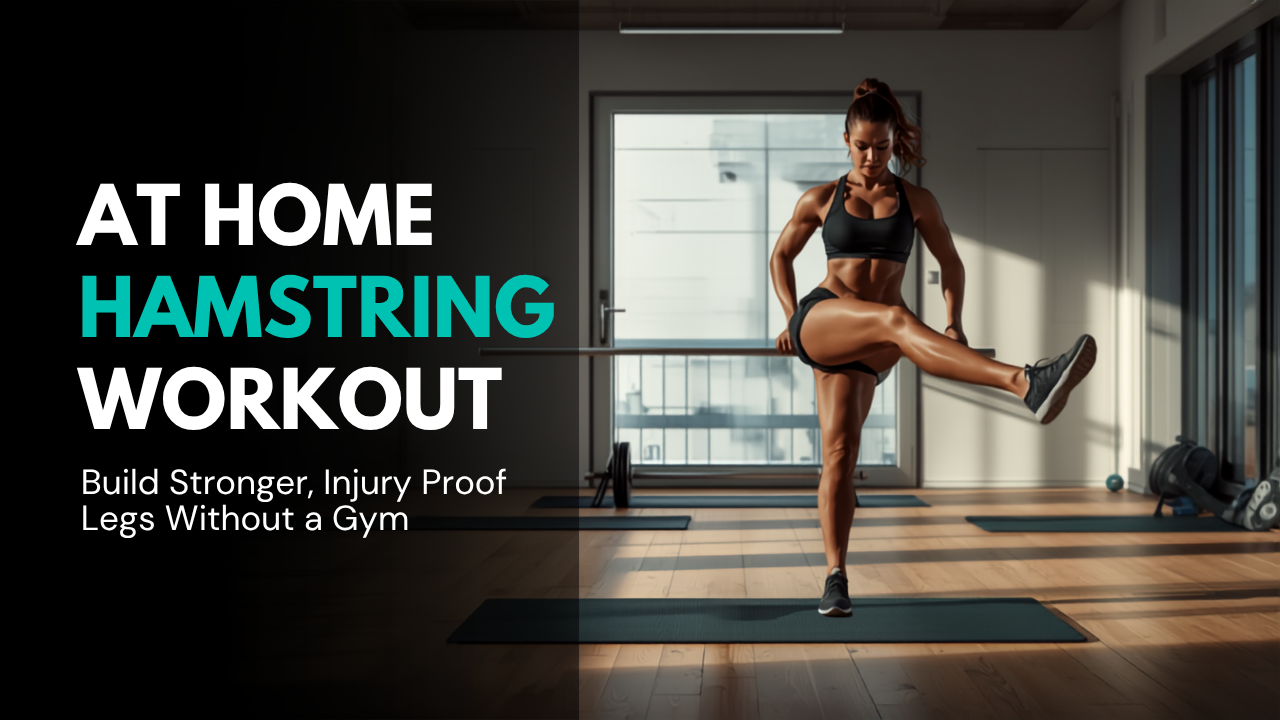
4. Single Leg Deadlift (Balance + Strength)
- Stand on one leg
- Hinge forward while extending the other leg
- Return to upright position
Bonus: Improves stability and coordination
5. Resistance Band Leg Curl
- Attach band to a stable object
- Curl your leg toward your glutes
Best for: Simulating gym machines at home
6. Hamstring Walkouts
- Start in a bridge position
- Slowly walk your heels away
- Return back
Effect: Builds endurance and control
Bodyweight vs Equipment: What Should You Choose?
| Option | Best For | Pros | Cons |
|---|---|---|---|
| Bodyweight | Beginners | No cost, simple | Limited resistance |
| Resistance Bands | Intermediate | Versatile, portable | Less load than weights |
| Dumbbells | Strength building | Progressive overload | Requires investment |
Quick Decision Guide
- No equipment? → Start with bridges and walkouts
- Limited budget? → Use resistance bands
- Serious strength goals? → Add dumbbells
Complete At Home Hamstring Workout Plans
Beginner Routine (2–3 Days/Week)
- Glute Bridges 3 sets × 12 reps
- Hamstring Walkouts 3 × 8
- Band Leg Curls 3 × 10
Intermediate Routine
- Romanian Deadlifts 4 × 10
- Single Leg Deadlifts 3 × 8 (each leg)
- Nordic Curls 3 × 5
Advanced Routine
- Nordic Curls 4 × 6
- Singlem Leg RDLs 4 × 10
- Elevated Glute Bridges 4 × 12
Step by Step: How to Structure Your Workout
1. Warm Up (5–10 Minutes)
- Leg swings
- Light bridges
- Dynamic stretches
2. Main Workout
- 3–4 exercises
- 3–4 sets each
- Controlled tempo
3. Cooldown
- Hamstring stretches
- Foam rolling
The Power of Eccentric Training (Game Changer)
Most people focus on lifting but the real magic happens when lowering the weight.
What Is Eccentric Training?
It’s the phase where the muscle lengthens under tension.
Why It Matters
- Builds stronger muscle fibers
- Reduces injury risk
- Improves flexibility
Example
During a Romanian deadlift, take 3–4 seconds to lower down. That’s where growth happens.
Common Mistakes That Slow Your Progress
Avoid these if you want real results:
- Rounding your lower back during exercises
- Moving too fast without control
- Skipping warm ups
- Ignoring progressive overload
- Overtraining without recovery
Injury Prevention & Recovery
Hamstrings are prone to strains especially when tight or weak.
Prevent Injuries With
- Proper warm up routines
- Eccentric focused exercises
- Gradual intensity increases
Warning Signs
- Tightness behind the knee
- Sudden sharp pulling sensation
- Reduced mobility
Recovery Tips
- Light stretching
- Foam rolling
- Rest days between sessions
Real World Home Setup (Works Anywhere)
You don’t need a fancy gym.
Minimal Setup
- Floor mat or carpet
- Resistance band
- Water bottles or backpack as weights
Budget Range (Global Average)
- Resistance bands: $5–$30
- Dumbbells: $20–$100+
Weekly Programming for Best Results
Simple Weekly Plan
- Day 1: Strength (RDLs, bridges)
- Day 2: Rest or mobility
- Day 3: Eccentric focus (Nordic curls)
- Day 4: Light activity or recovery
Consistency beats intensity.
Best Practices for Faster Results
- Train hamstrings 2–3 times weekly
- Focus on mind muscle connection
- Increase resistance gradually
- Combine strength + flexibility work
Conclusion
A strong set of hamstrings isn’t built in the gym it’s built through consistency, control, and smart training. Start simple. Focus on form. Progress gradually. Whether you’re using bodyweight, resistance bands, or dumbbells, the key is sticking to a structured routine and prioritizing quality movement. Train with intention, and your hamstrings will not only grow stronger but more resilient, balanced, and injury proof over time.